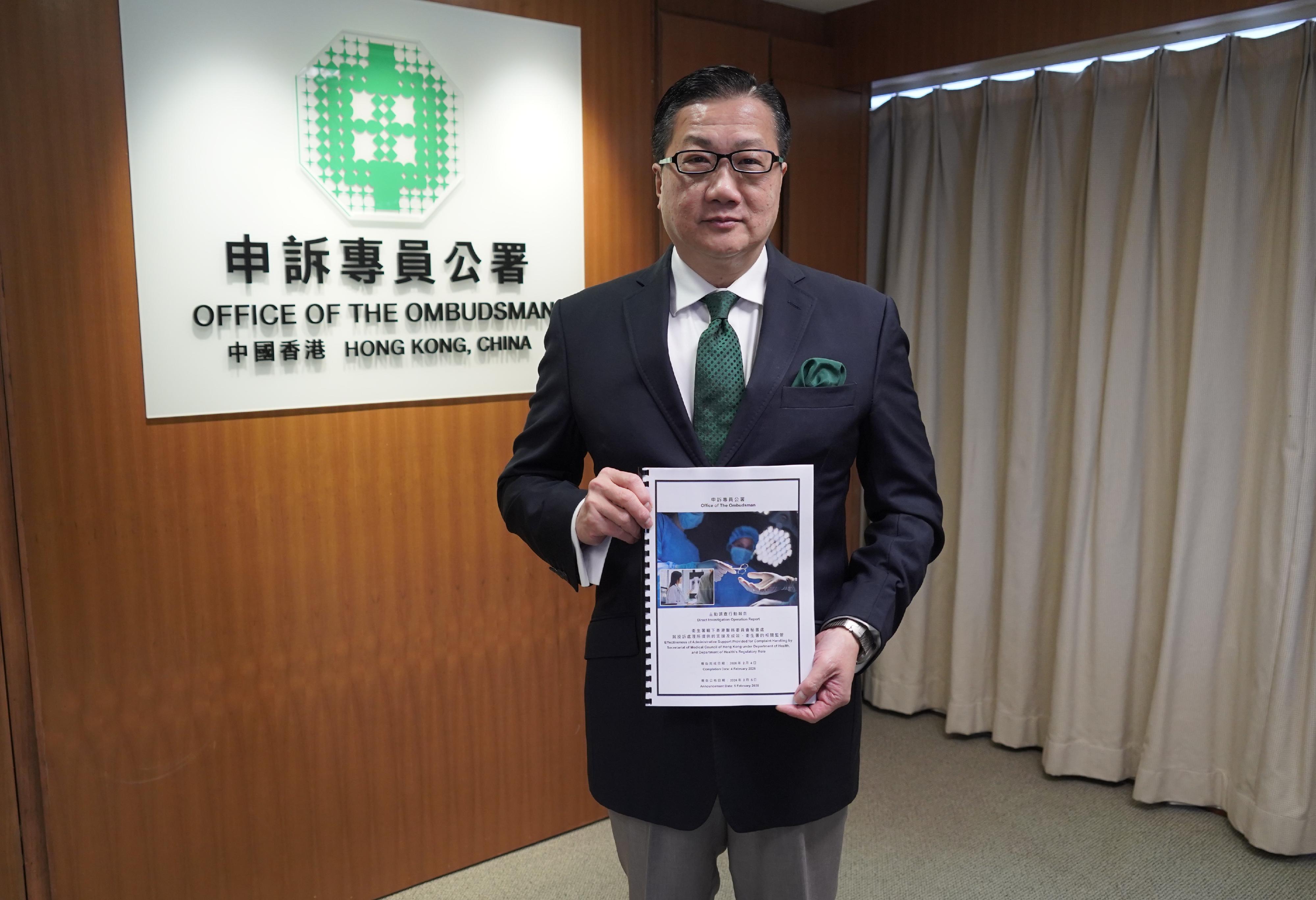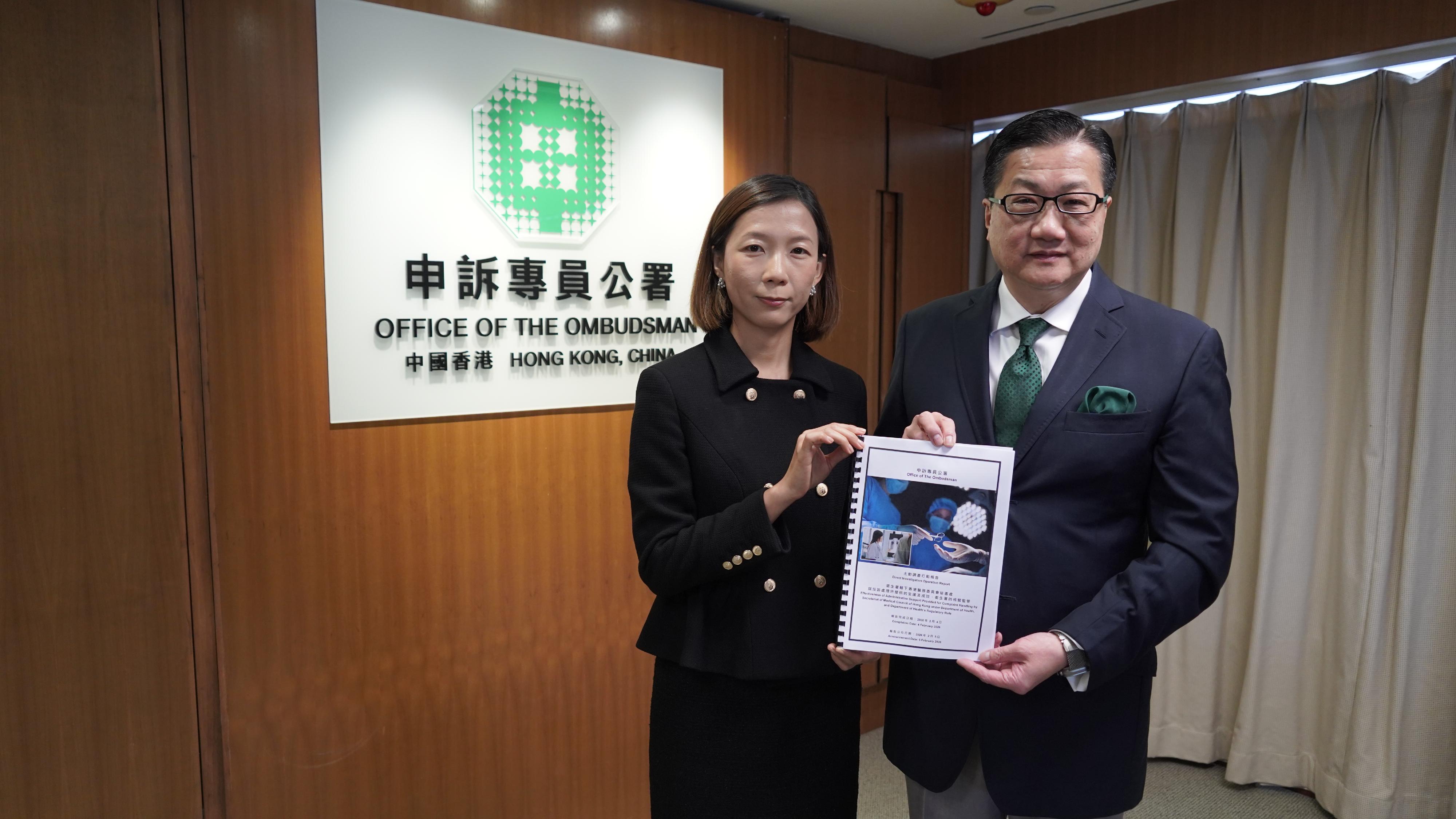



Ombudsman announces results of direct investigation operation into effectiveness of administrative support provided for complaint handling by Secretariat of Medical Council of Hong Kong under Department of Health and Department of Health's regulatory role (with photos)
******************************************************************************************
The Ombudsman, Mr Jack Chan, today (February 5) announced the completion of a direct investigation operation into the effectiveness of administrative support provided for complaint handling by the Secretariat of the Medical Council of Hong Kong (MCHK) under the Department of Health (DH), and the DH's regulatory role. The Office of The Ombudsman (the Office) made 21 improvement recommendations to the authorities.
It has come to the attention of the Office that in October 2025, some media reported on a 15-year delay by the MCHK in handling a complaint concerning an infant left with cerebral palsy, while the MCHK Secretariat (the Secretariat) was unable to explain the delay. The MCHK stayed the proceedings permanently on the grounds that too much time had passed for the medical practitioner under complaint to be given a fair hearing. The incident raised significant public concern from all sectors. Subsequently, further media reports emerged alleging that the MCHK had delayed handling complaints involving the death of a woman after childbirth, and the death of a patient after taking prescribed medication. All the above cases were outstanding for nearly 10 years or even longer. The public is therefore extremely concerned about any inadequacies in the mechanism and process of the MCHK and its Secretariat for handling complaints.
Mr Chan said, "The Office shares the wide community concern about whether a proper and effective mechanism and process are in place for handling complaints against medical practitioners. We, therefore, initiated a direct investigation operation into the DH. During our investigation into the Secretariat under the DH's establishment, the Office also found systemic issues and inadequacies in the management and operation of the MCHK's complaint-handling and monitoring mechanism. Given the Office's duty to enhance the quality and standards of public administration, promote administrative fairness, take into account significant public interest and respond to community concerns, we also give a detailed account of relevant findings and observations in this report. We endeavour to promote and facilitate the Government's review of any room for improvement in existing legislation, systems, administrative support and resource allocation, thereby ensuring that the MCHK can effectively fulfil its statutory functions on handling complaints against medical practitioners."
The Office's investigation found that the Secretariat provides the MCHK with administrative support, including that for investigations and disciplinary proceedings into public complaints against registered medical practitioners for professional misconduct. While Secretariat staff are all civil servants under the DH's establishment, they are under the direct leadership of the MCHK and perform duties as Secretariat staff to support the MCHK in discharging its statutory functions under the Medical Registration Ordinance (MRO). The MCHK directly supervises and manages the handling and progress of complaints against registered medical practitioners, and is accountable to the public for its effectiveness.
As the Secretariat's role is to provide secretarial and administrative support, the Office considers its functions to be solely providing the MCHK with support service and acting under the latter's direction. The MCHK, as the organisation vested with this power by the MRO, certainly plays the most important role in handling such complaints. The powers conferred on the MCHK by the law naturally entail corresponding responsibilities, and should not leave an impression with the public on an unclear delineation of responsibilities between the MCHK and the Secretariat. From a macro perspective, the Government has an overall supervisory role over the healthcare sector.
Regarding the complaint processing time, the Government amended the MRO in 2018. One of the objectives was to clear the MCHK's then existing backlog of over 700 cases within three years, followed by the completion of most inquiry cases within the two years thereafter. During the social unrest stemming from the riots in 2019 and 2020, the number of complaints received by the MCHK surged to 3 286 and 3 356 respectively, far exceeding the annual average of 576 complaints over the preceding five years. Between 2020 and 2025, the MCHK completed a total of 263 cases by inquiry, or an annual average of 44 cases. From receiving a complaint to completing the inquiry, more than 75 per cent were completed within five years, but a few cases took much longer, including 11 cases (4 per cent) which took as much as 10 to 15 years. Evidently, the MCHK's efficiency in complaint handling fell short of the objectives set upon the legislative amendment. However, compared with the 132 cases (or an annual average of 21 cases) completed by inquiry in the five years (i.e. from 2013 to 2017) preceding the 2018 amendment to the MRO, the current number of cases handled by inquiry has more than doubled.
Pursuant to the MRO, the MCHK's complaint handling involves independent quasi-judicial proceedings, during which it is essential to safeguard the legitimate rights and full participation of all parties, and ensure procedural justice. Some complaints may involve complex procedures. However, overall speaking, the current investigations and disciplinary proceedings into complaints against medical practitioners are excessively long and fall far short of public expectations. This situation has serious implications, and may cause unfairness, for both complainants and complainees. Cases involving serious professional misconduct, if it has really existed, may even pose a risk to patient safety. The Secretariat should make more effort to provide administrative support in managing and prioritising complaints, thereby facilitating the MCHK's effective exercise of its quasi-judicial functions and powers under the MRO.
Between 2020 and 2025, the median processing time for each stage of completed inquiry cases was as follows: 10.4 months for the initial consideration stage by a Preliminary Investigation Committee (PIC), 14 months for the PIC deliberation stage and 11 months for the inquiry stage. Yet, certain cases took a significantly long time at the initial consideration, PIC deliberation and inquiry stages. For instance, one case took 102.1 months (or around 8.5 years) at the initial consideration stage by the PIC, probably with periods of inaction.
As of December 2025, the MCHK had a backlog of 895 complaint cases, of which, most were outstanding for less than two years from the date of receiving the complaint (755 cases or 84 per cent). However, a small fraction of cases were outstanding for extremely long periods, including a case which is now at the pre-PIC stage seven years after being received by the MCHK.
The Office is pleased to note that since the 2018 amendment to the MRO, the number of cases completed by the MCHK each year has increased significantly, and the time taken for inquiries has been shortened. The Office also recognises the surge in cases stemming from past circumstances, and notes that the MCHK undertook a review in January 2025 with measures implemented to improve the efficiency of complaint handling, such as assigning senior officers to co-ordinate and monitor the progress of cases, with a dual-track mechanism established for monitoring; enhancing the case tracking functionality of the complaints information system, and comprehensively reviewing and updating all ongoing cases; and regularly compiling monthly progress reports for review and follow-up. These measures aim to enhance overall operational efficiency through strengthened monitoring of complaint cases, optimising workload distribution and workflows, plug the loopholes identified and resolve bottlenecks. The Office commends the MCHK for proactively undertaking a review and implementing measures with positive results.
Nevertheless, the Office considers that the statistics cited above reflect that the MCHK's progress in complaint handling is still too slow, resulting in a persistent backlog of cases. There remains an urgent need to critically review and thoroughly improve the complaint-handling process.
The Office considers that the Government should urge the Secretariat to use its best efforts to support the MCHK's review of complaint-handling procedures, substantially strengthen the monitoring of the progress of cases, effectively expedite the handling of complaint cases, and clear the backlog as soon as possible.
The Office also found that the DH conducts the performance appraisals of Secretariat staff, all of whom are DH staff, without consulting the MCHK. This indicates a lack of communication between the DH and the MCHK. Moreover, it is questionable how the DH could assess the performance of Secretariat staff without consulting the MCHK over the years. The Office recommends that the DH establish a communication mechanism with the MCHK to assess the performance of Secretariat staff, and draw up objective criteria as the basis for the appraisals of Secretariat staff.
The Office also identified several other improvement areas required of the MCHK, including ascertaining with complainants whether a case also involves circumstances requiring referral to the coroner, considering how to make effective use of information from inquests, and reaching out to complainants not required to testify at disciplinary inquiries to ascertain whether they need simultaneous interpretation service during the proceedings.
Mr Chan said, "The Office recognises that the MCHK's decision to refer cases to an inquiry panel for inquiry is based on relevant legislation. On the other hand, the public may not be fully aware of the MCHK's complaint handling procedures. Statistically, the fact that most cases are not referred to an inquiry panel can raise public doubt. The Office considers that the Government should remind the MCHK to enhance transparency in complaint handling, and explain to the public why some complaints are not pursued or substantiated. This will enable the public to understand the MCHK's regulatory role and responsibilities, as well as the substance and purpose of its complaint handling mechanism, thereby upholding society's confidence in the regulatory system over the healthcare sector in Hong Kong.
"The Office urges the MCHK to continue striving for excellence, diligently fulfilling its mission of ensuring justice, maintaining professionalism and protecting the public, and proving itself worthy of the trust of complainants, complainees, society and the public."
The Office's major recommendations for improvement to the authorities include:
- Encouraging the MCHK to draw on the principles of good public administration, including efficiency, fairness, reasonable and proper conduct, having a people-oriented mindset and openness. It should promote awareness within the MCHK and request the sector to understand the pursuit of good public administration and public expectations, and expedite the handling of public complaints against medical practitioners for alleged professional misconduct;
- Urging the Secretariat to support the MCHK's formulation of administrative guidelines to ensure the effective operation of its complaint-handling process. For instance, it should consider setting and publishing reasonable and effective target timelines for each key stage of complaint handling, thereby seriously discharging its obligations towards complainants and complainees;
- Urging the MCHK to critically explore streamlining procedures, such as adopting the facts established by the court, or inviting experts who have testified at an inquest to serve as expert witnesses in the MCHK's disciplinary inquiry to save time for remitting cases back to the PIC due to new expert opinions;
- Urging the MCHK to perform diligently its substantive supervisory duties over the Secretariat, including requiring the Secretariat to fully support the MCHK's work with clear reporting on the progress of the case and backlog status;
- Urging the MCHK to step up the management and performance supervision of Secretariat staff;
- Explicitly stipulating the MCHK's powers and responsibilities and ensuring that the MCHK is accountable to society and the public;
- To strike a balance between professional autonomy on one hand, and the principles of fairness, openness and social accountability and public expectations on the other, and in light of overseas experience, the authorities should consider properly increasing the proportion of lay members in the MCHK to widely incorporate knowledge, experience and views from all sectors of society, thereby comprehensively optimising the governance system and structure;
- Enhancing the legislation to strengthen the MCHK's complaint review mechanism, including allowing complainants to request a review by the MCHK directly, thereby safeguarding the basic rights of complainants and complainees, and strengthening public confidence in the mechanism for handling complaints;
- Without compromising the fairness, urging the MCHK to provide complainants and complainees with regular updates on case progress as far as possible;
- The DH should consult the MCHK when conducting performance appraisals for Secretariat staff;
- The DH should adopt and consider objective criteria, such as case processing efficiency and backlog status, for the performance appraisals of Secretariat staff; and
- Exploring the feasibility of resolving medical disputes that do not involve professional conduct of medical practitioners by mediation.
All 21 recommendations made are accepted by the authorities.
The full investigation report is available on the website of the Office of The Ombudsman at www.ombudsman.hk for public information.
Ends/Thursday, February 5, 2026
Issued at HKT 16:18
Issued at HKT 16:18
NNNN
Photo