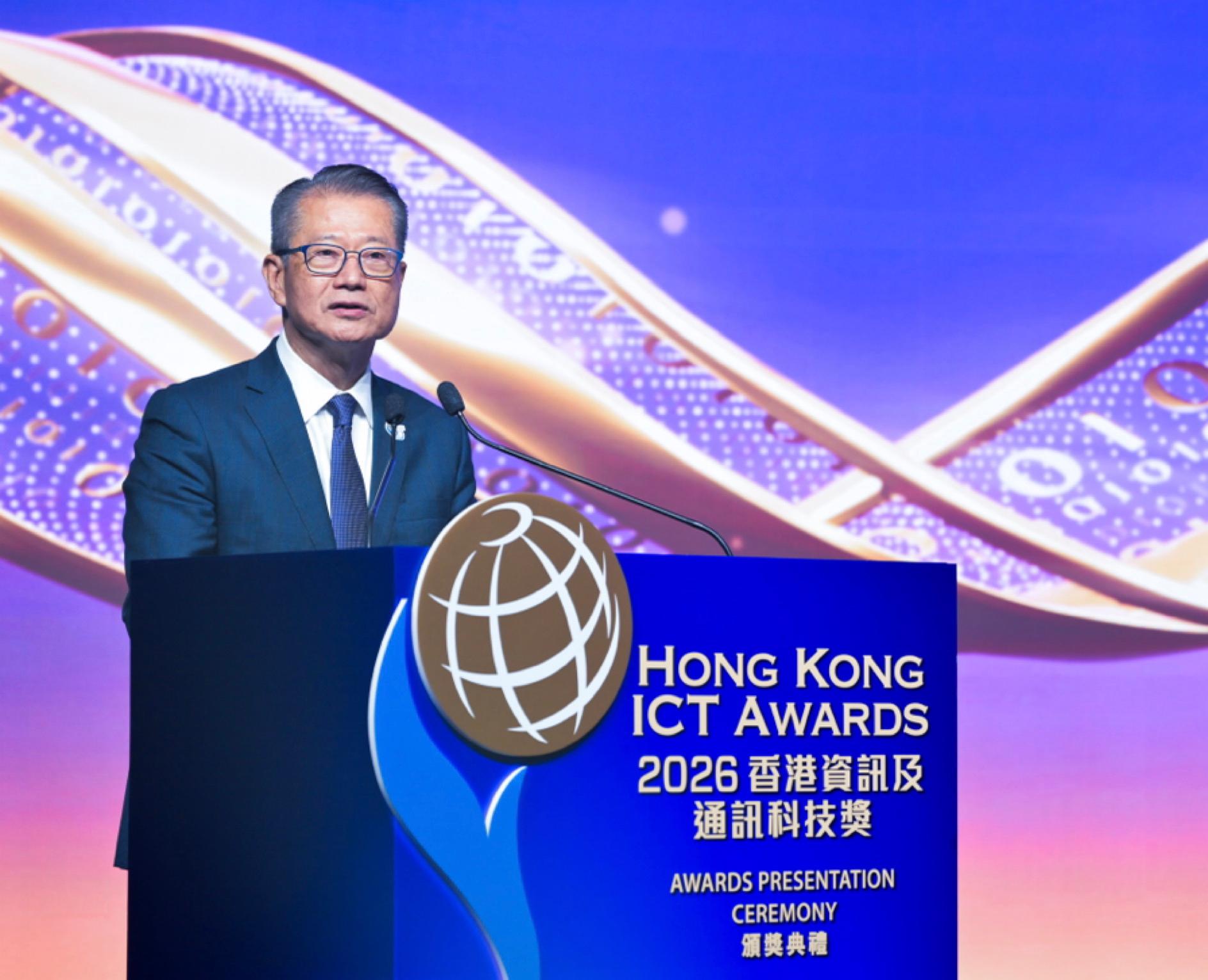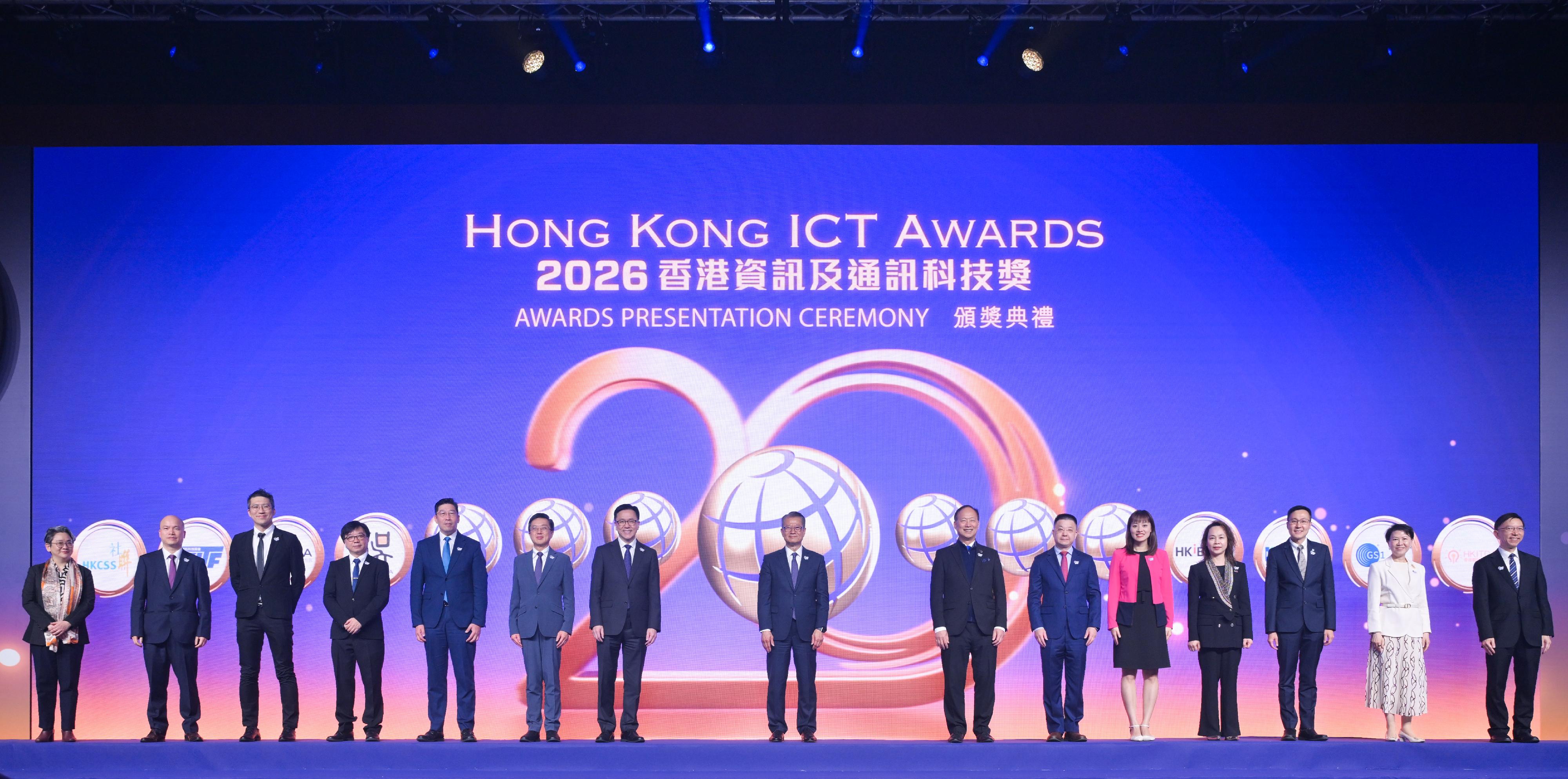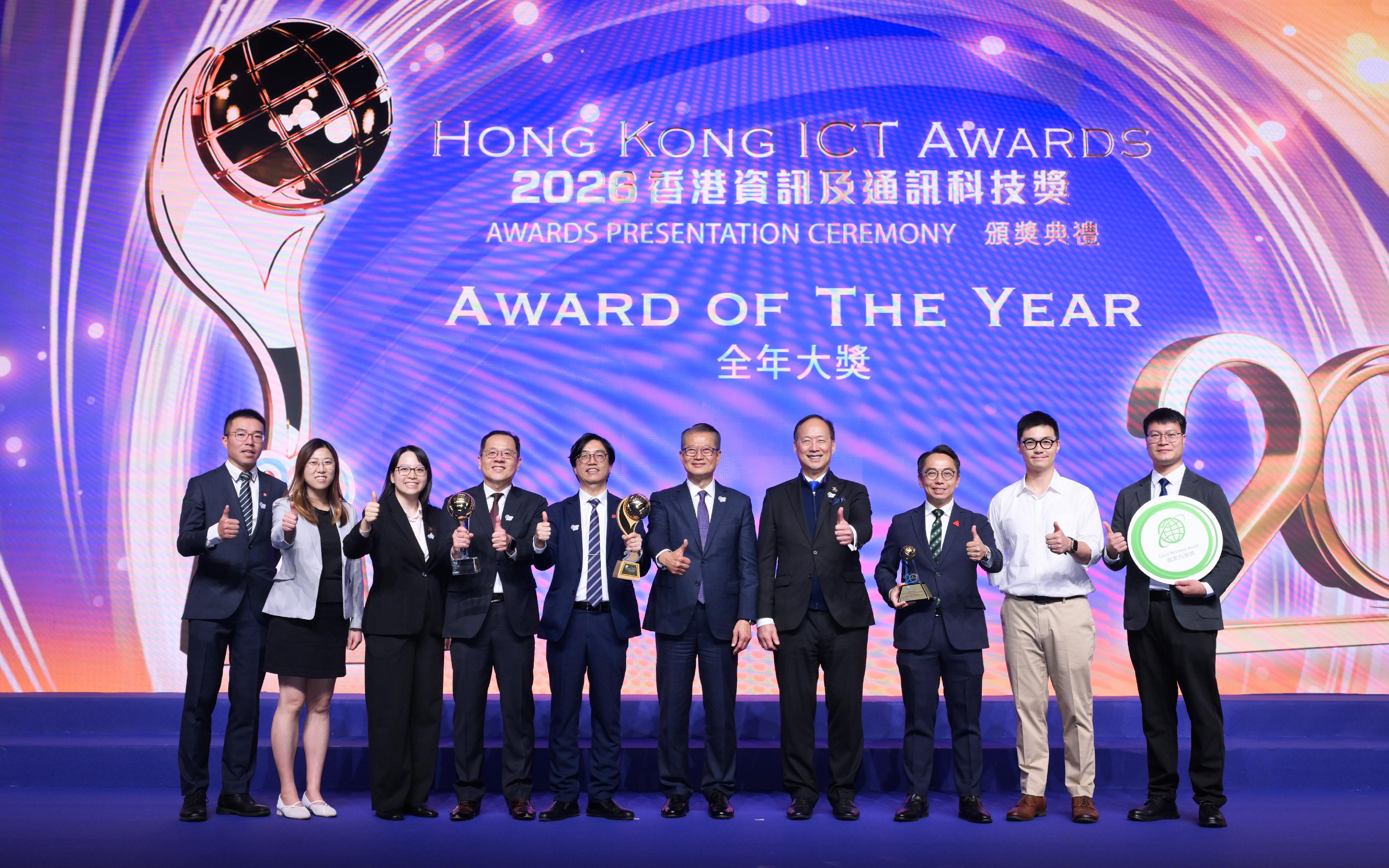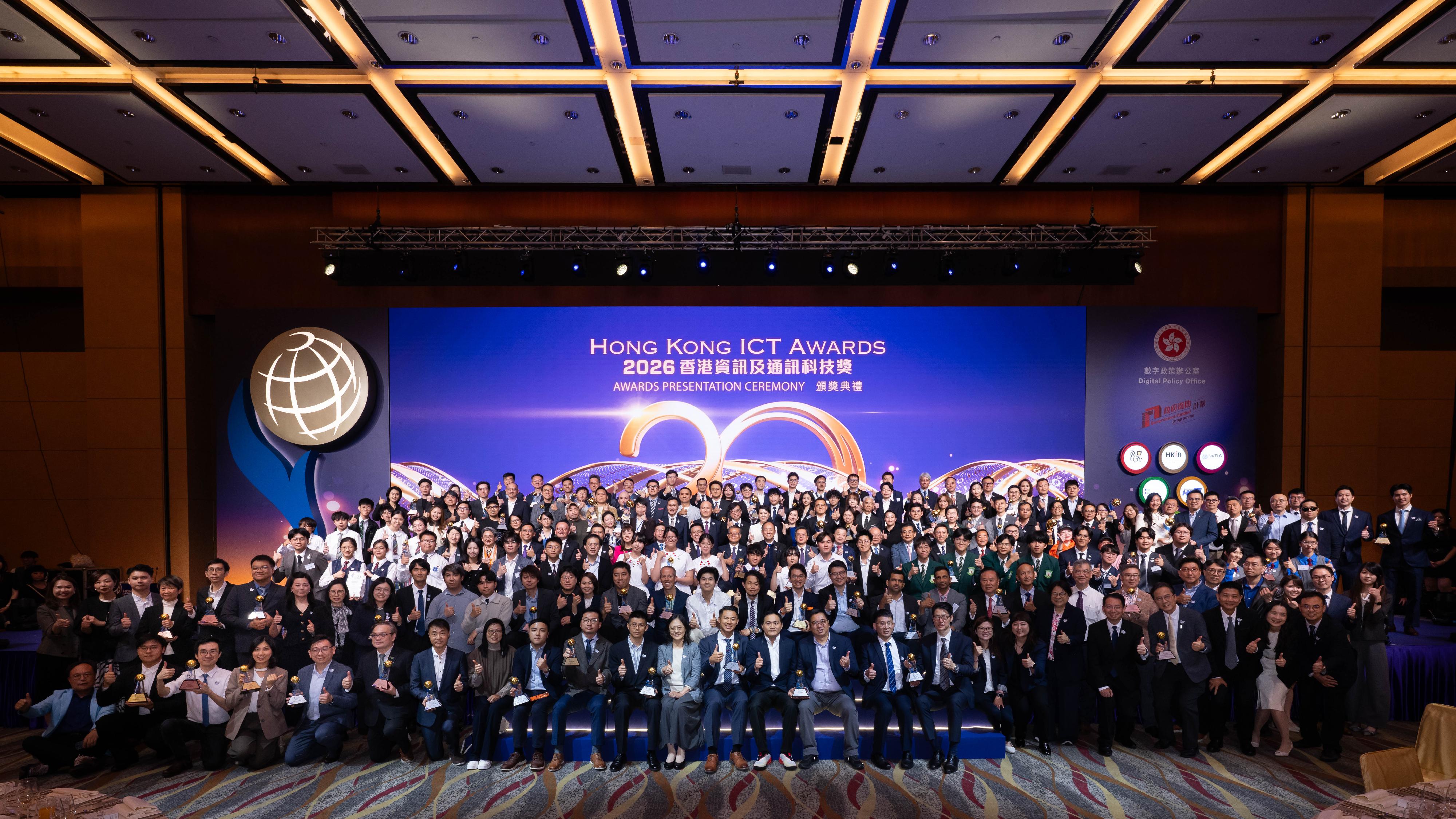

Speech by FS at presentation ceremony for Hong Kong ICT Awards 2026 (English only) (with photos/video)
******************************************************************************************
Professor Alexander Wai (Chairman of the Grand Judging Panel of the Hong Kong ICT Awards 2026 and the President and Vice-Chancellor of Hong Kong Baptist University), Professor Sun Dong (Secretary for Innovation, Technology and Industry), distinguished guests, ladies and gentlemen,
Good evening. It is a great pleasure to join you tonight to celebrate the 20th anniversary of the Hong Kong ICT Awards, and to honour the winners this year.
Twenty years ago this month, the very first awards were presented right here in this venue. The Award of the Year went to a Wi-Fi base station. The iPhone had yet to be unveiled.
Look back at the winners over the years, and you can see how much has changed. An app that lets you catch virtual butterflies on a smartphone. A ring that screens for sleep apnoea at home. Biometric technology that helps travellers move more quickly through our airport. And last year, an AI system that spots defects on the production line.
The technology has changed. But the winners have something in common: they saw what people needed and found a new way to help.
This year's theme is "Innovate, Inspire, Impact". Sometimes an inventor sees a need and creates something new. Sometimes it works the other way round, where an invention inspires someone else to take it in a new direction.
The story of the laser is a case in point. In 1960, the first laser was switched on in California. It was a remarkable achievement, but few at the time could have foreseen its impact. Indeed, the laser was once described as "a solution looking for a problem".
Today, lasers are at work everywhere from the operating theatre to the supermarket checkout. But one of the most far-reaching applications came from Professor Charles Kao and his colleague George Hockham. Sixty years ago, they proposed that, if the glass were pure enough, light could carry information over long distances through a glass fibre. That insight helped lay the foundations for the Internet. In 2009, Professor Kao shared the Nobel Prize in Physics.
I believe we are at a similar moment with AI. AI has already found many use cases. But, as with the laser, some of its most important applications may still lie ahead. AI can help us do familiar things better. The more interesting question is: what may it allow us to do differently? We may reinvent a business model, redesign a service or rethink how we teach and learn. Many of the winners tonight are pointing the way. They show us not just what AI can do, but what it makes possible for people.
For the Government, our role is to give innovators like you the conditions to succeed. Through the Committee on AI+ and Industry Development Strategy, we are helping more industries put AI to work. That takes computing power. The data facility cluster now under construction at Sandy Ridge will expand Hong Kong's computing capacity. It also takes research. The Hong Kong AI Research and Development Institute will help turn research breakthroughs into practical applications. And it takes people, too. We are training specialists to lead this work, while our "AI for All" programme helps people across the community use AI with confidence.
Ladies and gentlemen, over the past 20 years, these Awards have brought together a community of innovators. The Winner Circle, launched this year, brings together people who have won in different years and across different categories. It gives them the chance to learn from one another and pass on what they have learned to the newcomers and next generations.
To the students and young innovators with us tonight, let me return to the phone in your pocket. It looks very different from the phones we used 20 years ago. Twenty years from now, the tools in your hands will have changed even more. But the future will still belong to those who use technology well and dare to push the boundaries of what it can do.
Let me thank the organisers, the eight industry bodies leading the award categories, and Professor Wai and the Grand Judging Panel. Your dedication and rigour give these Awards their standing.
To all our winners, my warmest congratulations again. Six decades ago, Professor Charles Kao showed us how far a single technology could travel. I hope the ideas and applications we celebrate tonight will make a difference here in Hong Kong and well beyond.
Thank you, and have a wonderful evening.
Ends/Thursday, November 19, 2026
Issued at HKT 18:43
Issued at HKT 18:43
NNNN