


WHO holds expert meeting in Hong Kong, China to advance development of International Herbal Pharmacopoeia (with photos)
******************************************************************************************
Experts from six WHO regions (including Africa, the Americas, the Eastern Mediterranean, Europe, South-East Asia, and the Western Pacific) are participating in the meeting, which opened today. They will review and discuss the proposed quality specifications for 12 herbal medicines, and consider the content of the first volume of the IHP.
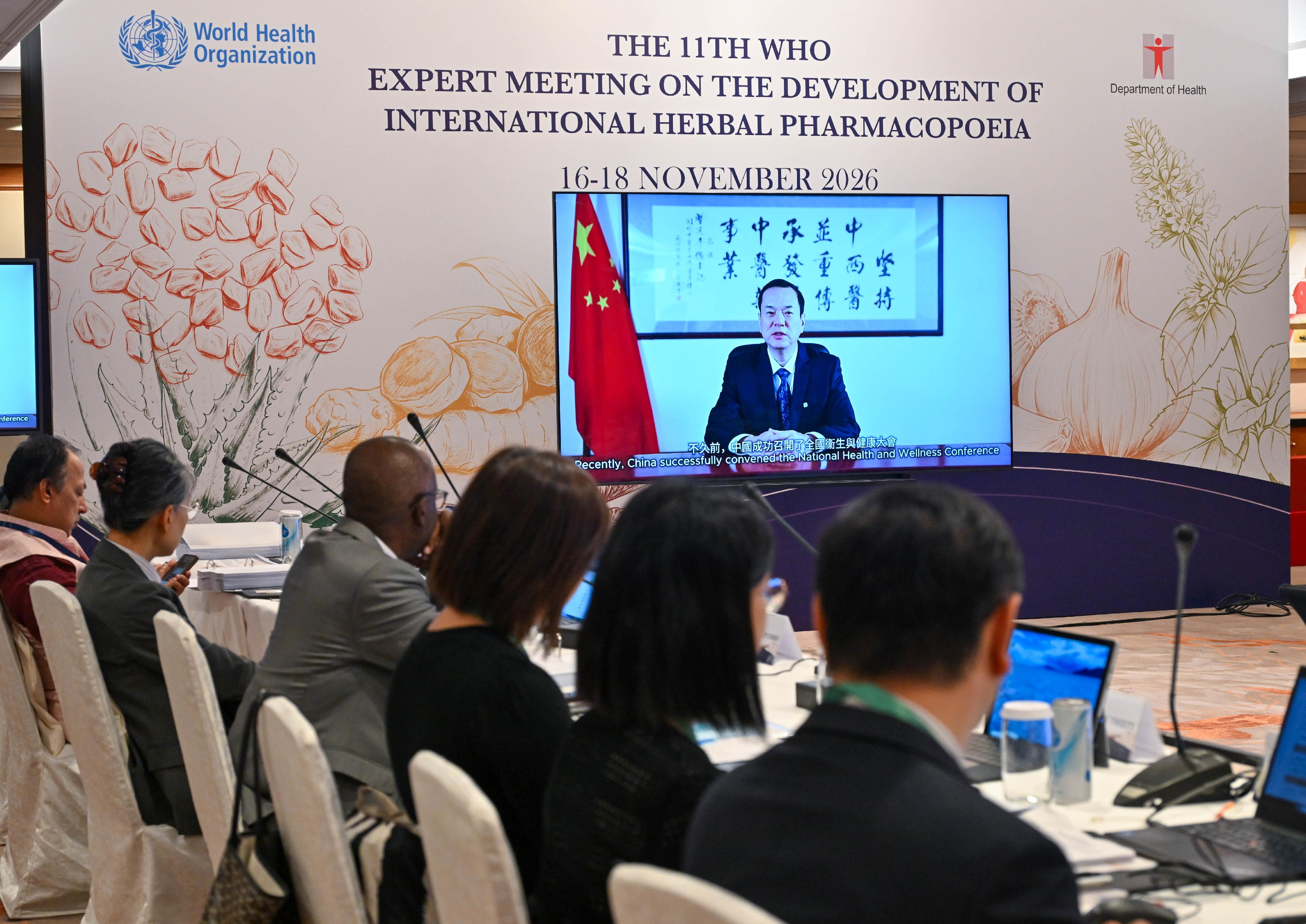
During the opening ceremony of the meeting, Vice Minister of the National Health Commission and Commissioner of the National Administration of Traditional Chinese Medicine (NATCM), Mr Liu Jinfeng, addressed the meeting by video.
"Traditional medicine plays an important role in health systems worldwide, complements modern medicine and makes positive contributions to advancing global health. The Beijing Initiative on the Conservation and Sustainable Use of Traditional Medicinal Plant Resources calls on the international community to jointly advance the 'New-Era Shennong Herbal Project' and related international cooperation initiatives. In developing the IHP, we should uphold scientific and evidence-based approaches, promote openness and collaboration, put people at the centre, and ensure that the standards provide practical guidance," he said.
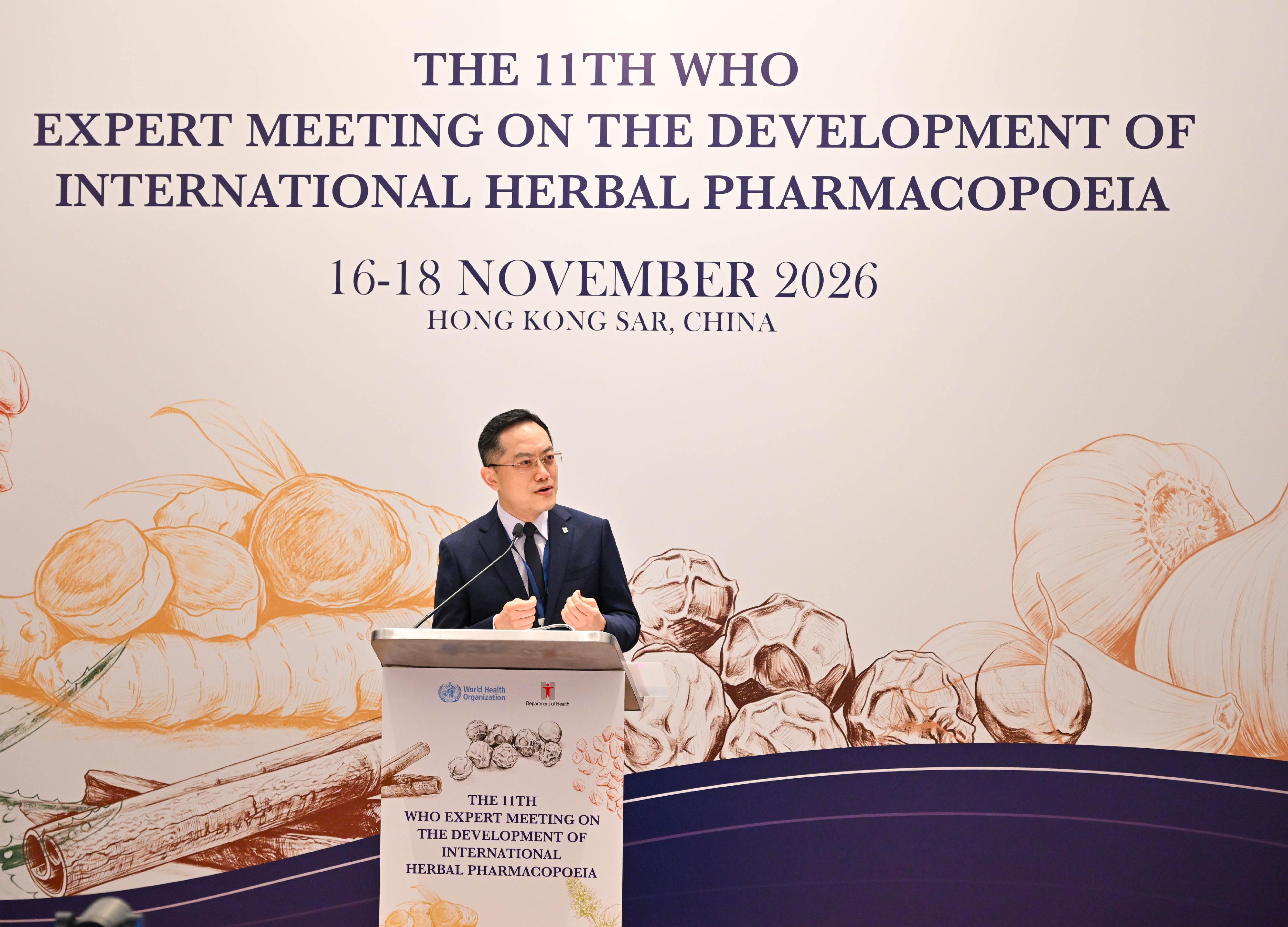
The Director of Health, Dr Ronald Lam, said at the opening ceremony, "As traditional medicine continues to play an important role in global healthcare systems, establishing evidence-based approaches for integrating traditional medicine into the global health system and harmonising quality standards of herbal medicines across different regions has become a shared global challenge. This meeting provides a valuable platform for experts to exchange knowledge and work towards greater consistency in the quality standards of herbal medicines. As a WHO Collaborating Centre (WHOCC) for Traditional Medicine, the Chinese Medicine Regulatory Office of the DH is pleased to host the meeting and, together with the Pharmacopoeia Commission for Indian Medicine & Homoeopathy (PCIM&H) of the Ministry of Ayush, Government of India, to contribute technical expertise to the development of herbal medicine monographs."
He also briefed attendees on the latest developments in Hong Kong regarding the formulation of quality control and regulation for Chinese medicines.
Dr Lam said, "The First Five-Year Plan for Economic and Social Development of the Hong Kong Special Administrative Region (HKSAR) (2026-2030) and the Chief Executive's 2026 Policy Address expressly set out support for the Government Chinese Medicines Testing Institute (GCMTI) under the DH in contributing to the development of international standards through platforms such as the WHOCC for Traditional Medicine. These efforts aim to promote Chinese medicine products in overseas markets, and develop Chinese Materia Medica (CMM) Standards that align with international standards, thereby extending the benefits of Chinese medicine services and products to more countries."
The WHO emphasises that developing the IHP falls under strategic objective 2 of the WHO Global Traditional Medicine Strategy 2025-2034. Drawing on available scientific evidence, experts at the meeting held technical discussions on 12 herbal medicine monographs. These meetings reviewed quality standards, general chapters as well as a chapter covering biodiversity, traditional knowledge and the sustainable use of herbal medicines. Through this process, internationally harmonised quality standards for herbal medicines are established by expert consensus, helping countries strengthen their regulatory capabilities and ensuring the safety and quality of traditional medicinal products.
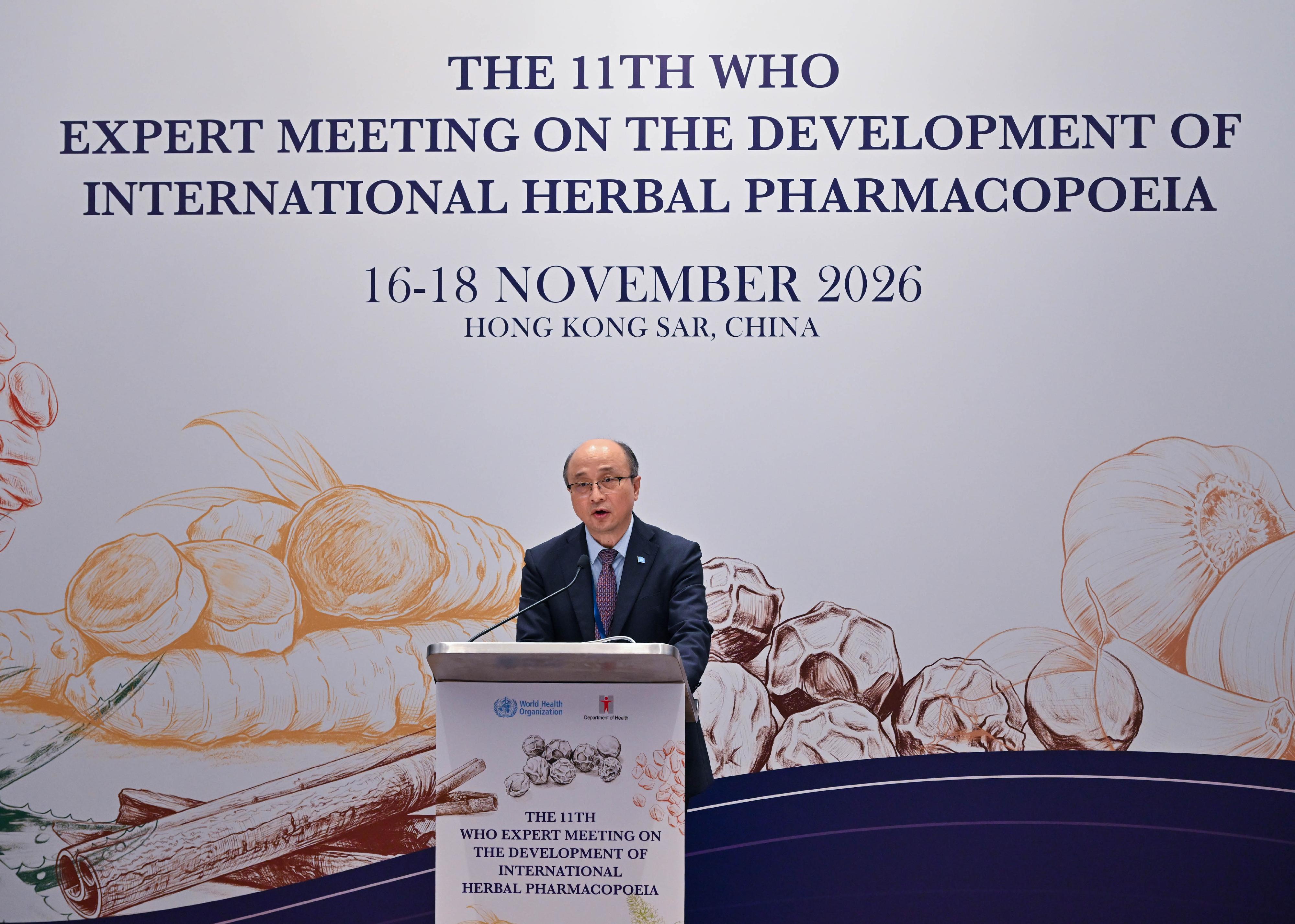
The Unit Head, Traditional Medicine Norms, Standards and Systems Integration Unit, Global Traditional Medicine Centre of the WHO, Dr Kim Sungchol, delivered opening remarks. He highlighted the WHO's long-standing experience with the International Pharmacopoeia and emphasised the importance of rigorous, science-based quality standards for medicinal plants. He welcomed the continued work on the IHP as an important contribution to strengthening quality assurance, regulatory capacity and the appropriate integration of evidence-based traditional medicine into health systems.
On promoting the internationalisation of reference standards for CMM commonly used in Hong Kong, the DH's Hong Kong Chinese Materia Medica Standards (HKCMMS) project has covered 357 Chinese medicinal materials so far. Through the International Advisory Board of the HKCMMS (www.cmro.gov.hk/html/eng/useful_information/hkcmms/organisation_structure.html), it has provided reliable, comprehensive and internationally recognised reference standards and has published 12 HKCMMS Volumes (www.cmro.gov.hk/html/eng/useful_information/pgcmti/innovation_and_standards_setting/hkcmms/volumes.html). Looking ahead, the GCMTI will continue to take forward the HKCMMS project and advance innovative testing technologies. On the regulatory front, the Centre for Medical Products Regulation of the DH will be established this year to consolidate regulatory functions for Western and Chinese medicines, as well as medical devices to enhance the existing regulatory regime. The HKSAR Government will continue to fully leverage Hong Kong's unique advantages under "one country, two systems", enjoying the strong support of the motherland while remaining closely connected to the world, to establish the HKSAR as a bridgehead for Chinese medicine to go global and to better integrate into and serve the national strategy of "Healthy China".
Ends/Monday, November 16, 2026
Issued at HKT 18:00
Issued at HKT 18:00
NNNN
Photo