


Election Committee Subsector Ordinary Elections' candidates briefed on electoral legislation and guidelines (with photos)
******************************************************************************************
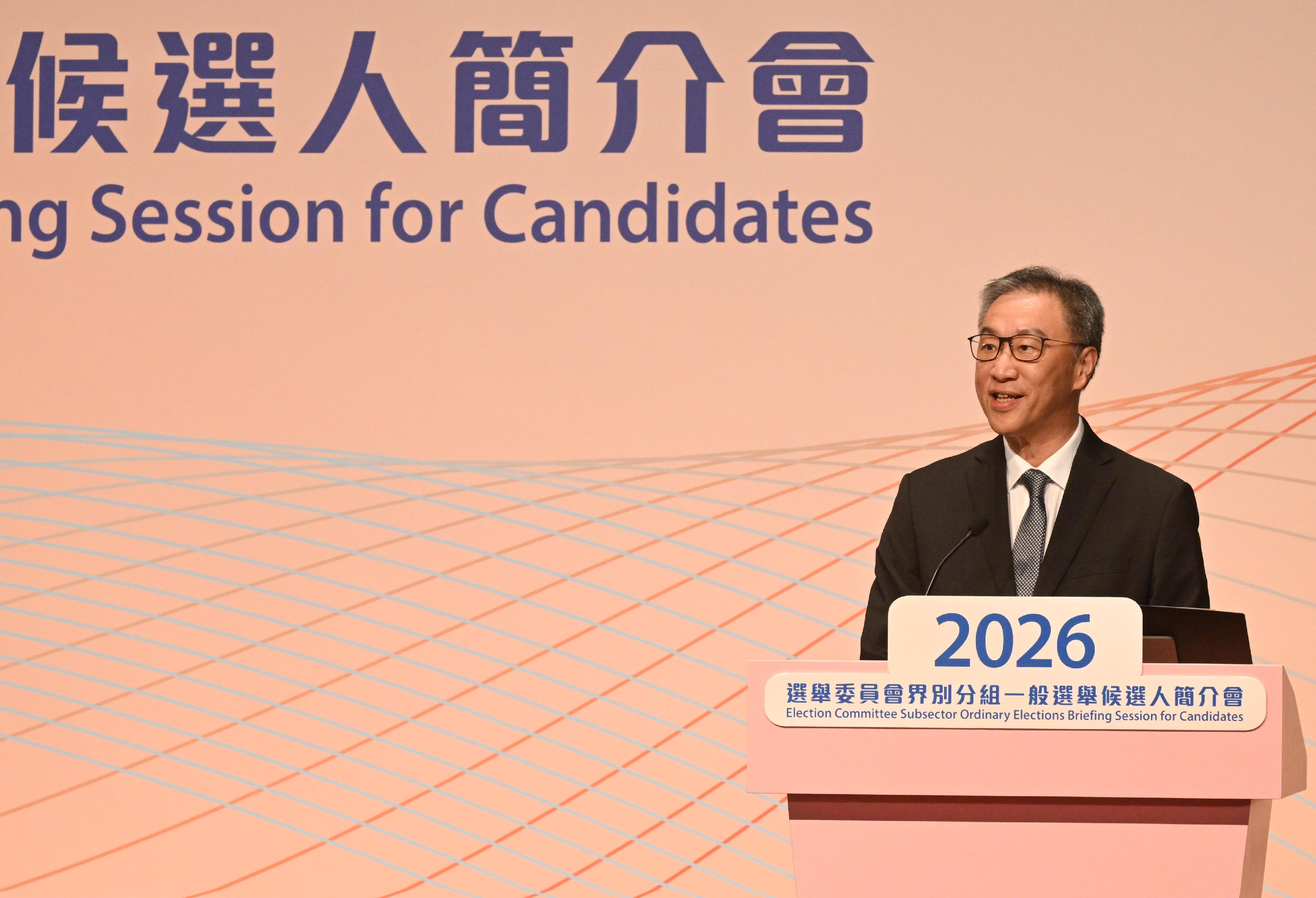
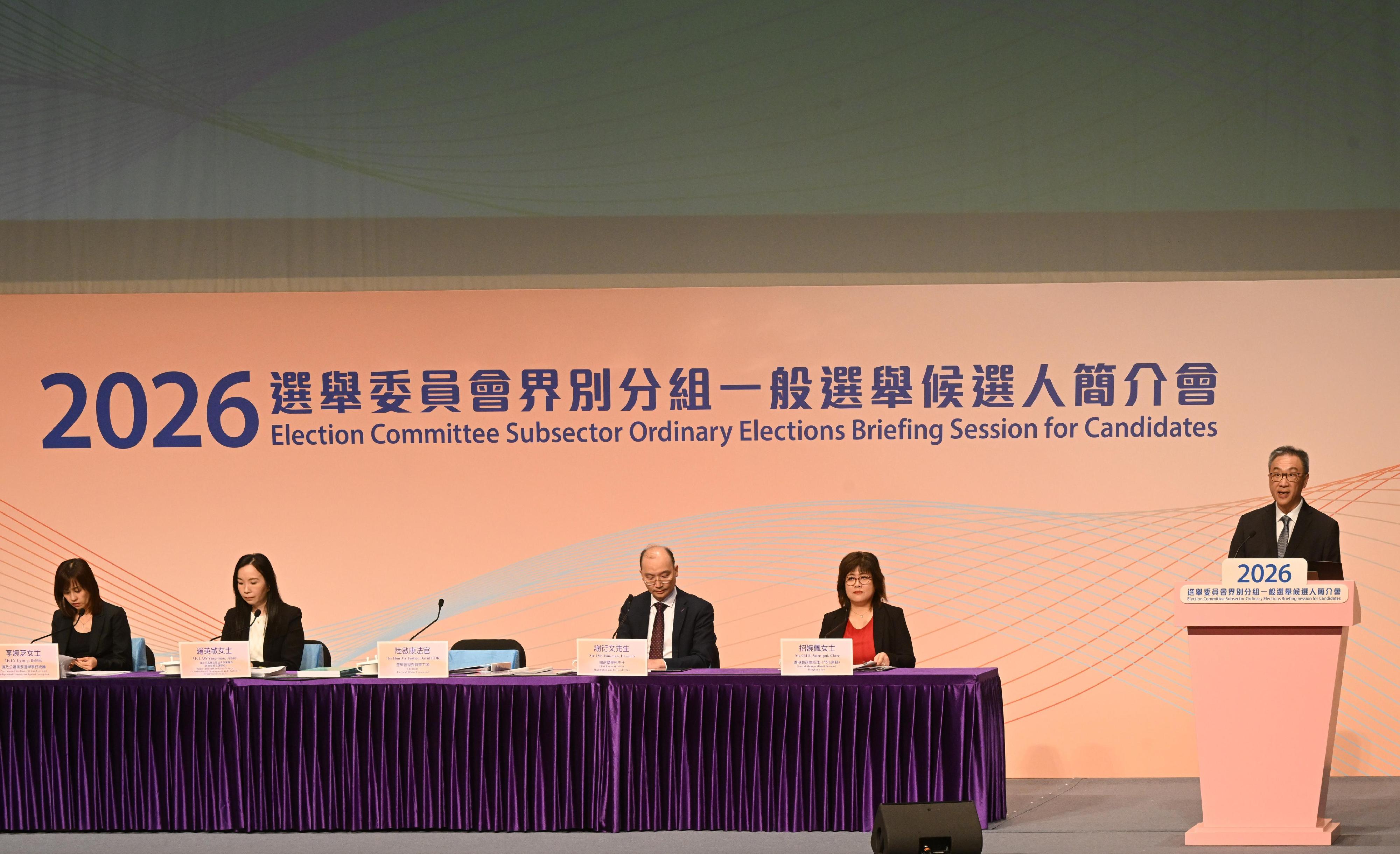
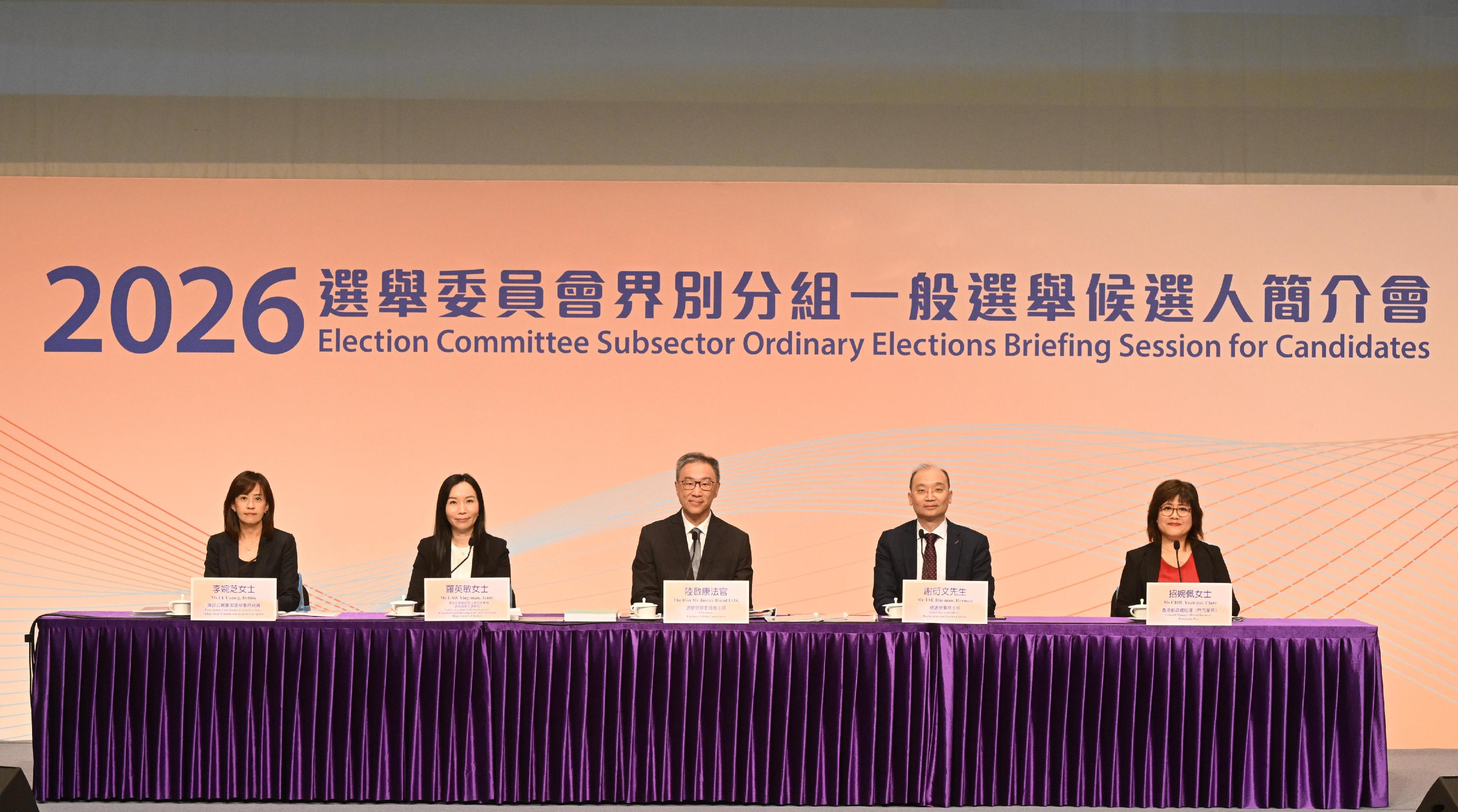
The Chairman of the Electoral Affairs Commission, Mr Justice David Lok, conducted a briefing tonight (November 3) for the candidates of the 2026 Election Committee Subsector (ECSS) Ordinary Elections on the electoral arrangements, the guidelines on election-related activities and important points to note in running their electioneering campaigns to ensure that the elections are conducted in an open, honest and fair manner.
Mr Justice Lok said at the briefing, "The ECSS Ordinary Elections will be held on November 22 and the nomination period closed on October 20. A total of 1 115 nomination forms for candidates were received during the nomination period. The Candidate Eligibility Review Committee earlier published notices in the Gazette with the names of the validly nominated candidates, and the Returning Officers (ROs) also published details in the Gazette of the candidates who were duly elected from the uncontested subsectors."
Mr Justice Lok said that for the elections, there are 31 contested subsectors, involving about 5 700 voters, who may vote on November 22 to elect 723 Election Committee (EC) members. The ROs have determined the order of the names of candidates appearing on a ballot paper by drawing lots on October 29 and the candidate numbers have also been promulgated in the Gazette notices.
At the briefing, Mr Justice Lok highlighted the arrangements and points to note of the elections that are related to the candidates.
No canvassing zone and no staying zone
On the polling day, a certain area outside each polling station will be designated as a no canvassing zone to ensure that voters can gain access to the polling stations without interference. No one is allowed to canvass for votes or conduct "de-facto canvassing" such as making hand gestures and greetings in the no canvassing zone. A no staying zone will also be designated in the vicinity of the entrance and exit of a polling station. No one is allowed to stay in the no staying zone.
The Presiding Officer will request the person who has committed such prohibited acts within these zones to leave. If the person concerned refuses to abide by the order, he or she may be evicted by law enforcement officers or authorised persons.
Arrangements for central counting
Central counting will be adopted for the elections. Once the poll is closed, the ballot boxes will be delivered to the Central Counting Station (CCS) at the Hong Kong Convention and Exhibition Centre. The ROs will supervise the counting process with the assistance of Assistant ROs and counting staff. Questionable ballot papers will be determined by the ROs on site, and their decisions will be final. Any objection raised against the ROs' decisions will be filed on record, and the candidates may make an appeal in accordance with the law.
Video-recording facilities will be installed at the CCS. Candidates, election agents and counting agents may enter the CCS and observe the count at designated areas of the counting zone. Members of the public and the media may also enter the CCS to observe the count, but they are not allowed to enter the counting zone. A notice setting out the maximum capacity of the public area will be displayed outside the CCS.
Announcement of election results
Once the counting of votes of a subsector is completed and verified by the Registration and Electoral Office, the RO will make known the counting results to the candidates and their agents present at the tables for determination of questionable ballot papers at the CCS. If none of the candidates or agents present requests a recount of votes, the RO will thereupon announce the election results. If, according to the counting results, there remain EC members to be elected and the remaining candidates with the highest number of votes have an equal number of votes, the RO shall determine the election results by drawing lots in accordance with the law. The elected candidates will be invited to receive applause on the stage of the Media Centre.
The election results will be displayed outside the CCS and published via press releases and the dedicated election website (www.elections.gov.hk).
Digitalisation of electoral forms
Electronic copies are available for most electoral forms for the elections. Candidates may submit the relevant electoral forms via the REO e-Form Upload Platform and the Central e-Form Services. Election advertisements-related forms can be submitted via the Central Platform for Election Advertisements. Candidates utilising the Central e-Form Services can also make use of the "e-ME" form-filling function of "iAM Smart". However, some of the forms, such as the Return and Declaration of Election Expenses and Election Donations (Election Return), or forms with statutory declarations, are still required under the existing laws or other requirements to be submitted in paper form.
Mr Justice Lok reminded the candidates that once the electronic forms are submitted through the platforms concerned, notifications of confirmation will be issued by the respective platforms via email and/or mobile phone SMS message. With the receipt of the notifications, there is no need to submit the forms using other means again.
Election expenses
To ensure candidates are contesting on a level playing field, a maximum limit of election expenses is set for each subsector: the maximum amount of election expenses for a candidate belonging to a subsector with the number of registered voters not more than 500 is $100,000, while that for a candidate belonging to a subsector with the number of registered voters more than 500 but not more than 5 000 is $160,000. It will be an offence if candidates and their election expense agents incur election expenses in excess of the prescribed maximum limit, be it a very small amount, and the candidates will be subject to criminal liability.
Election meetings
An election meeting is a meeting held to promote or prejudice the election of a particular candidate or particular candidates. Expenses incurred are considered as election expenses. Candidates should note that if they wish to hold election campaigns or election meetings in government premises, they must obtain prior approval from the relevant government departments.
Requirements of election advertisements
According to the law, an election advertisement is an advertisement used for the purpose of promoting or prejudicing the election of a particular candidate or particular candidates. Candidates must upload the electronic copies of the election advertisements and the permission, consent of support, etc, onto the REO's Central Platform for Election Advertisements or the candidate's platform, or submit the relevant materials to the ROs for public inspection within three working days after the publication of the election advertisements. It is an offence if a candidate fails to comply with the requirement.
In addition, at the briefing, a representative from the Independent Commission Against Corruption also briefed the candidates about the Elections (Corrupt and Illegal Conduct) Ordinance and the points to note regarding election expenses and election donations to enhance their understanding of the acts that may constitute corrupt or illegal conducts, whereas a representative from Hongkong Post provided the candidates with a brief overview of the arrangements for free postage service for election mail.
Information on the elections is available on the dedicated election website (www.elections.gov.hk). The video of the candidate briefing will also be uploaded to the dedicated election website and the RTHK website (www.rthk.hk/tv/dtt31/programme/2026ecsoebsc) later. The video is also available for replay via the RTHK website or by downloading the "RTHK On The Go" app.
Ends/Tuesday, November 3, 2026
Issued at HKT 21:55
Issued at HKT 21:55
NNNN
Photo