


Whale carcass found in Ham Tin Wan (with photos)
************************************************
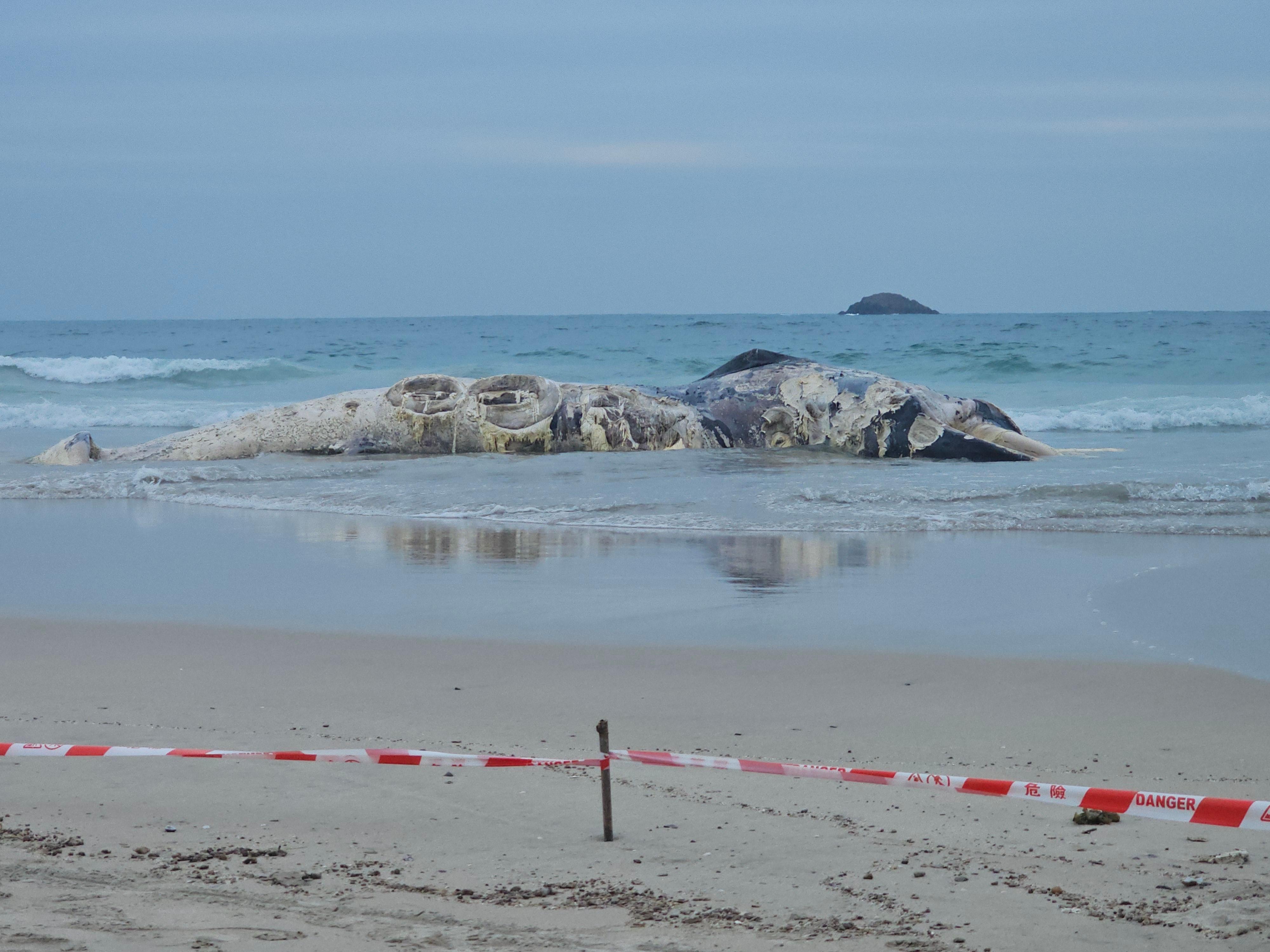
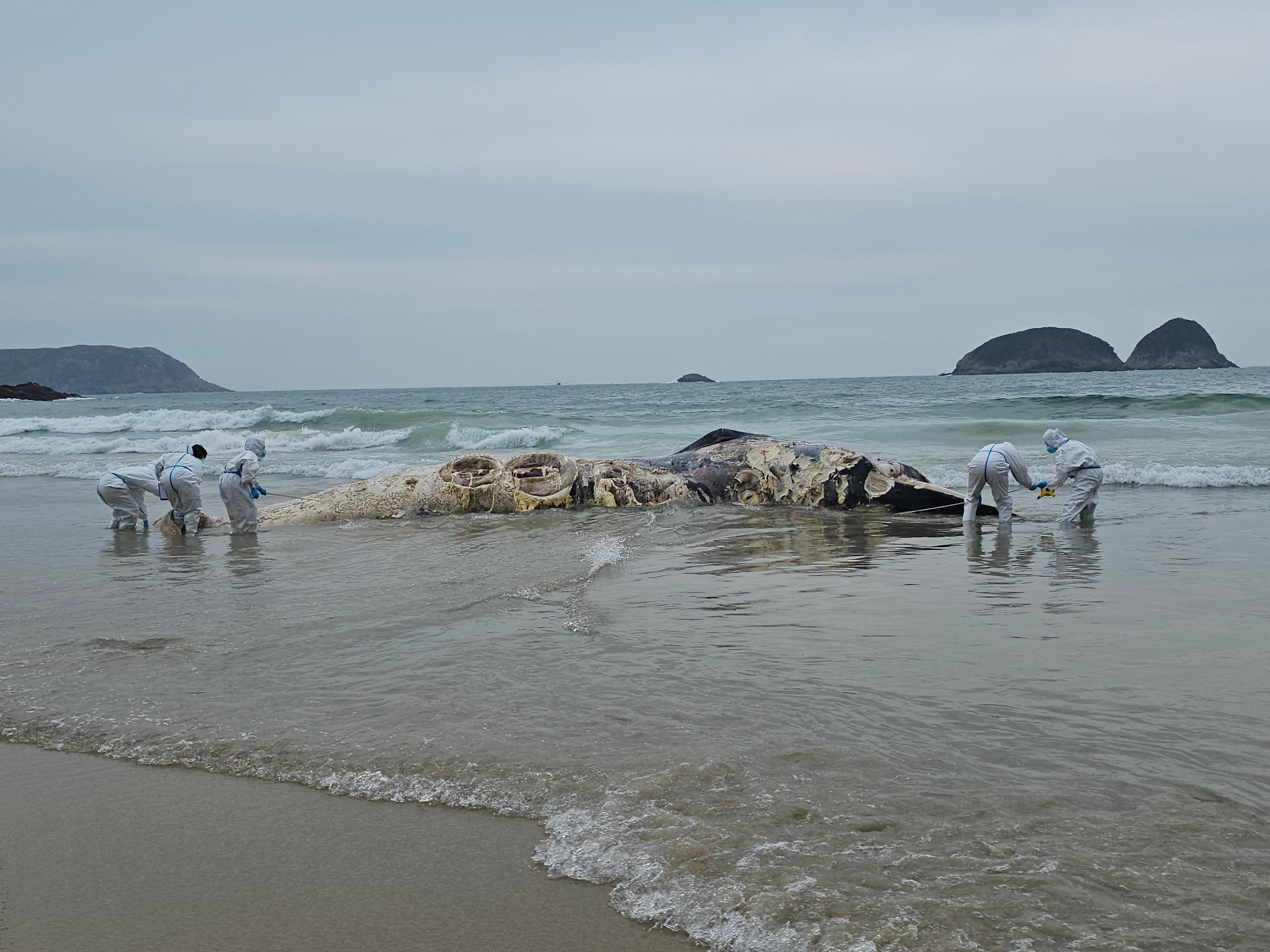
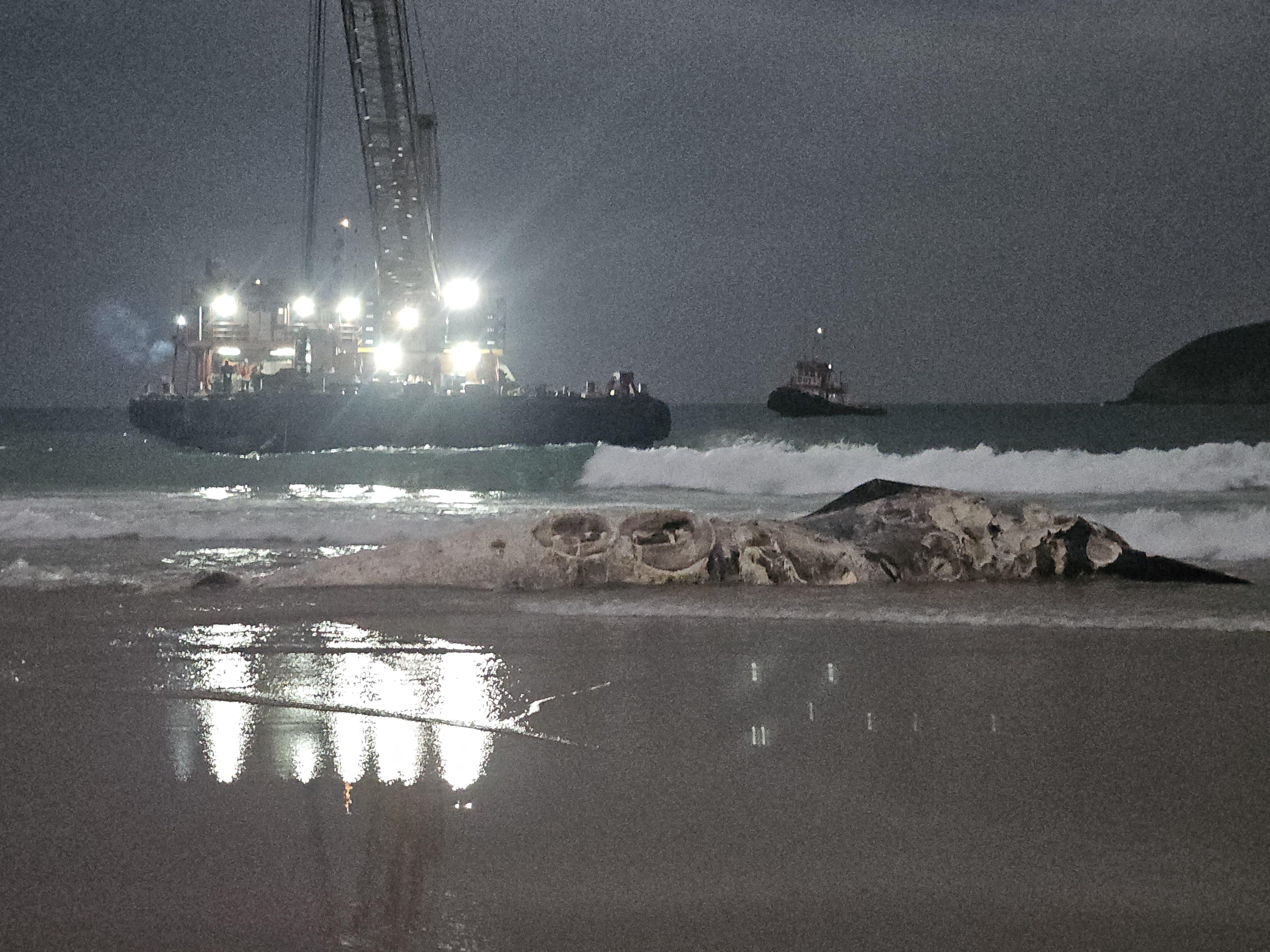
Preliminary assessment indicates that the carcass measured approximately 11 metres in length. Due to the severe decomposition, a necropsy cannot be further conducted to determine the cause of death. Staff are working to dispose of the carcass and clean up the area as quickly as possible, with completion expected tomorrow. Meanwhile, members of the public should avoid approaching the area to prevent hindering the disposal process and causing danger.
The deceased whale was not a local species. It is preliminarily believed to be a baleen whale. Based on the degree of decomposition of the carcass, it is estimated to have been dead for some time. It is believed that the carcass drifted into the waters of Ham Tin Wan from the open seas.
According to records, baleen whales are distributed almost globally across oceans, with different species inhabiting distinct waters. Baleen whales typically forage in the cold, high-latitude waters around the Arctic and Antarctic during the summer. In the winter, they migrate to warmer, low-latitude or tropical waters for breeding and nurturing their young.
The AFCD urges the public to report any whale sightings or stranded cetaceans immediately by calling 1823 or using the 1823 mobile application. Members of the public are reminded to maintain a safe distance from cetaceans, and prioritise personal safety to avoid dangerous situations.
Ends/Thursday, January 29, 2026
Issued at HKT 21:51
Issued at HKT 21:51
NNNN
Photo