


Speech by DSJ at Capital of Mediation event (English only) (with photos/video)
******************************************************************************
Distinguished guests, ladies and gentlemen,
Good afternoon. Allow me to conclude this afternoon's enriching dialogue and meaningful exchanges with a few words.
As a true advocate for alternative dispute resolution, the Government has been making consistent and focused efforts in enhancing the culture of communication and understanding within society. Since the introduction of the "Deepening Mediation Culture" initiative in the 2023 Policy Address, we have stepped up the promotion of mediation and arbitration services, solidifying Hong Kong's position at the forefront of both global and regional dispute resolution. As this session's theme suggests, Hong Kong is well positioned as the Capital of Mediation.
From the two panel discussions, with the valuable contributions and sharing from our speakers, we covered the role of mediation from both international and local standpoints. From dealing with inter-state disputes, commercial conflicts, and financial matters to community frictions, it has been shown that mediation can play a crucial role at the national level as well as in various aspects of our daily lives.
From a global perspective, as a prominent international financial centre, Hong Kong provides not only extensive financial services but also specialised financial-related dispute resolution services. Mediation, in particular, plays a critical role in addressing complex multi-borders financial disputes by offering a fair and efficient resolution process focusing on reaching a solution acceptable to all. This capability reinforces confidence among external investors and businessmen, reassuring them that their interests and property are well protected in Hong Kong.
On a local level, disputes are more diverse and seldom carry a clear price tag. Issues that impact our daily lives, such as water seepages, noise complaints from shared walls, or disagreements over communal facilities, can be equally stressful and disruptive. Unlike commercial disputes where parties' relationship is primarily contractual, these community conflicts involve people whose lives are closely intertwined, making amicable resolutions even more critical. In these cases, mediation has proven to be the most effective way to restore harmony; indeed, conflicts could well escalate and move from one matter to another if they are not peacefully resolved efficiently. Beyond resolving disputes, mediation also builds trust and encourages collaboration, hence fostering a long-term amicable relationship in the neighbourhood. By offering mediation skills training to property management staff, we trust we can greatly enhance the effectiveness of early intervention in community disputes. We hope after each amicable dispute resolution, the neighbours can continue to treat each other with courtesy and enjoy each other's company in the community.
Looking ahead, I would like to share some upcoming developments on local mediation. As mentioned in this year's Policy Address, the Government will continue to strengthen the accreditation and disciplinary systems for the mediation profession. Since the establishment of the Working Group on Mediation Regulatory System in 2024, a systematic review of Hong Kong's regulatory framework for the mediation profession has been conducted, resulting in the formulation of seven preliminary recommendations. The Working Group will continue to work on proposing suitable measures for enhancing the sustainable development of the mediation regulatory system.
Following the completion of the 15th National Games cohosted by Guangdong, Hong Kong and Macao, we have witnessed the immense potential for growth in the sports landscape in the region. This provides Hong Kong with new opportunities for even more collaboration and development. With this growth comes the need for a neutral, fair and efficient dispute resolution mechanism to address any conflicts that may arise in areas of sports and related business. In this regard, the Department of Justice will soon launch the Pilot Scheme on Sports Dispute Resolution to promote and support the sustainable development of the sports industry in Hong Kong.
Lastly, this evening, the mediation lecture will explore an emerging area of dispute resolution - entertainment. Our distinguished lecturer, Professor Sungkee Hong, has come all the way from the Republic of Korea to share distinctive perspectives on this topic.
As we conclude today's session, we would like to impress upon all of you to take mediation into action and to create a community grounded in understanding, collaboration, and lasting harmony. Thank you.
Ends/Wednesday, December 3, 2025
Issued at HKT 18:25
Issued at HKT 18:25
NNNN
Photo
Audio / Video
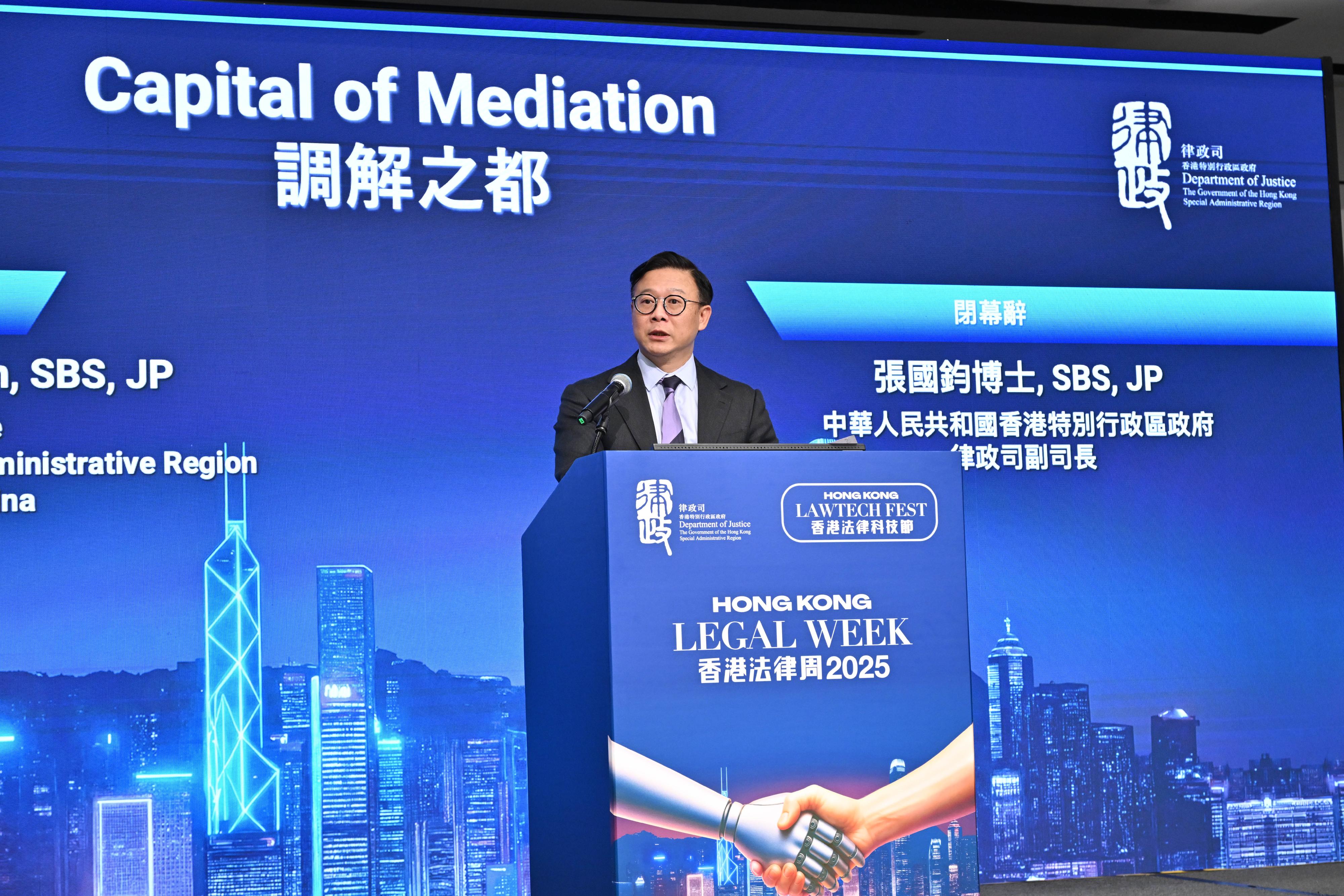
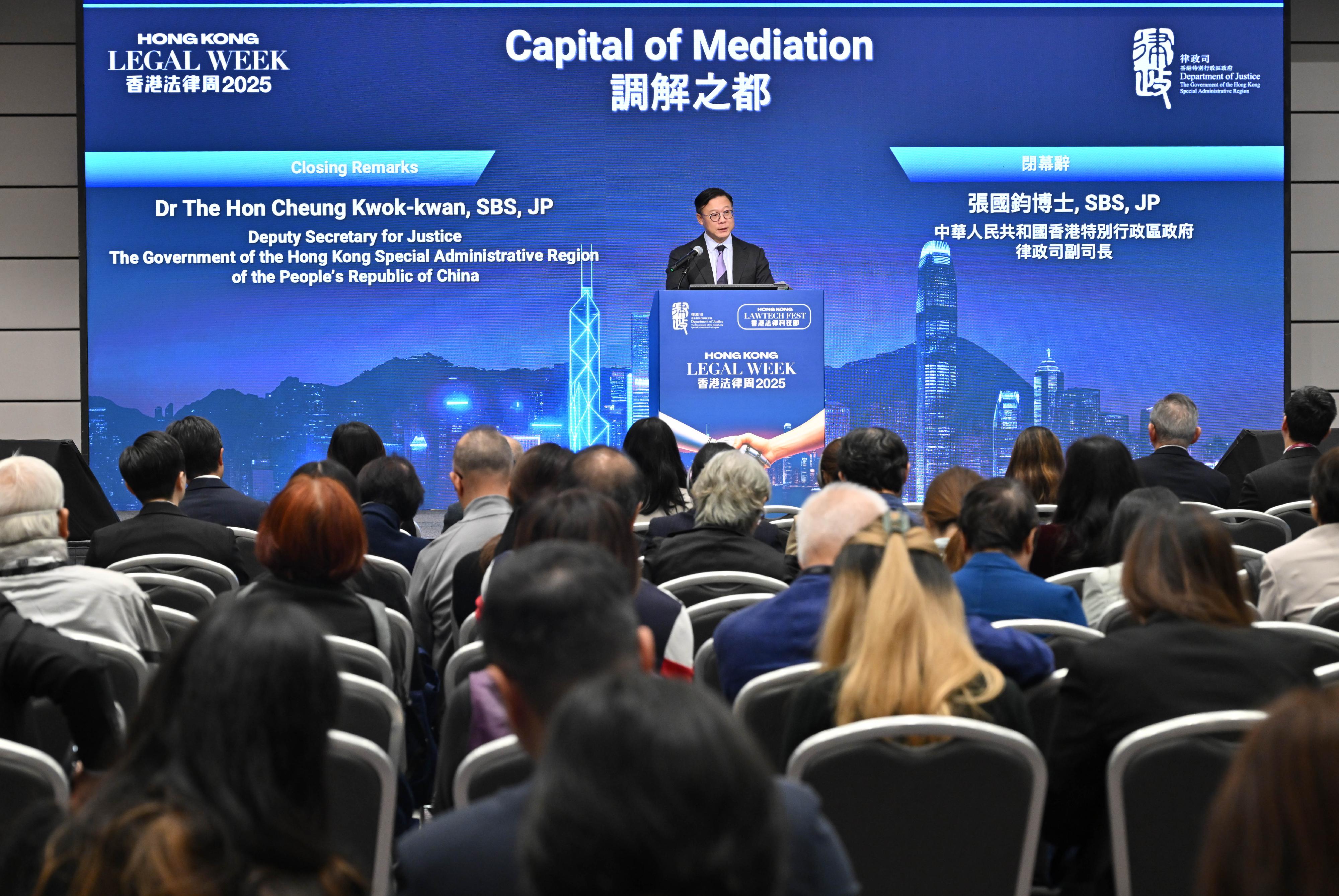
DSJ speaks at Capital of Mediation event under Hong Kong Legal Week 2025