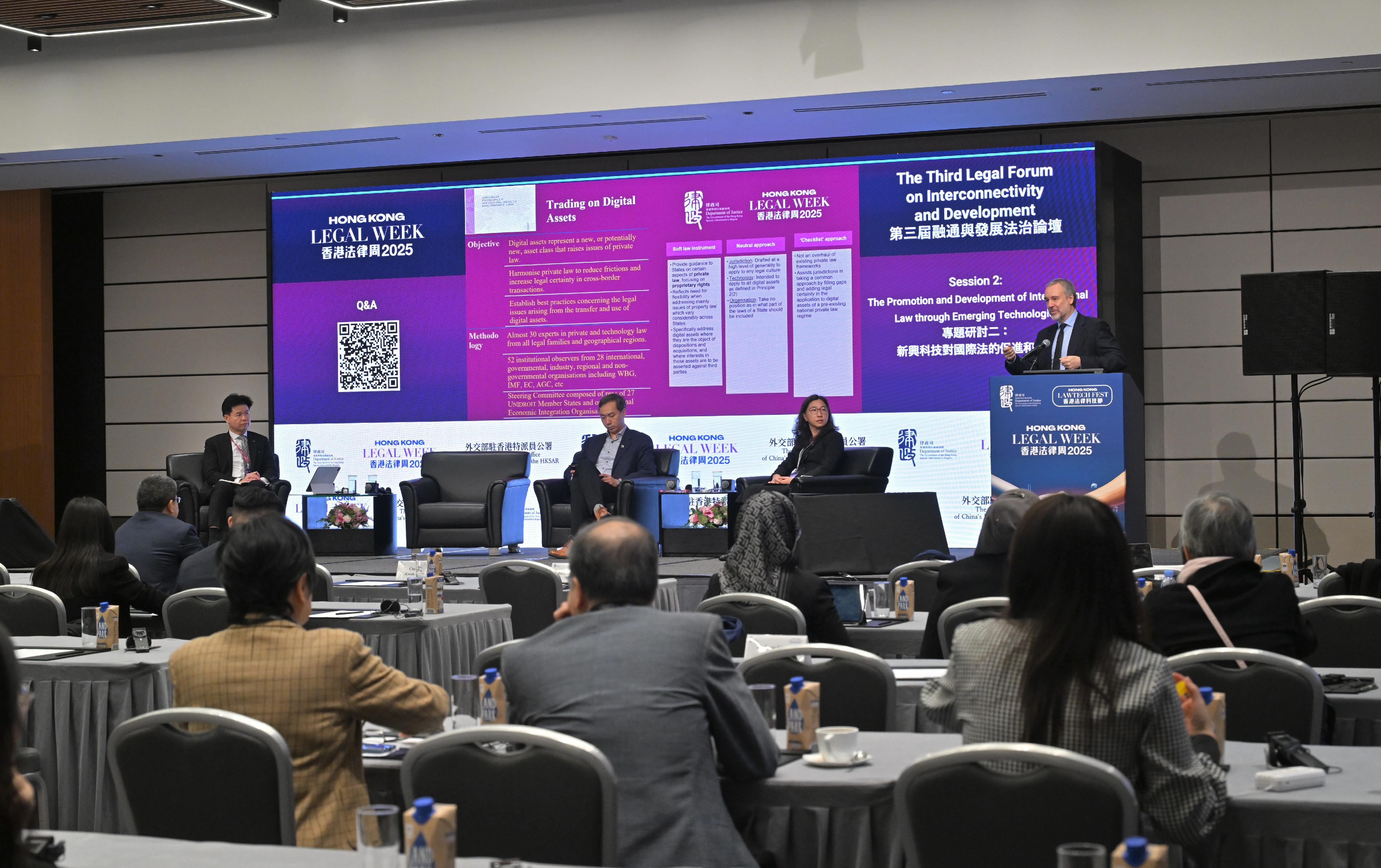

Speech by SJ at Third Legal Forum on Interconnectivity and Development (English only) (with photos/video)
******************************************************************************************
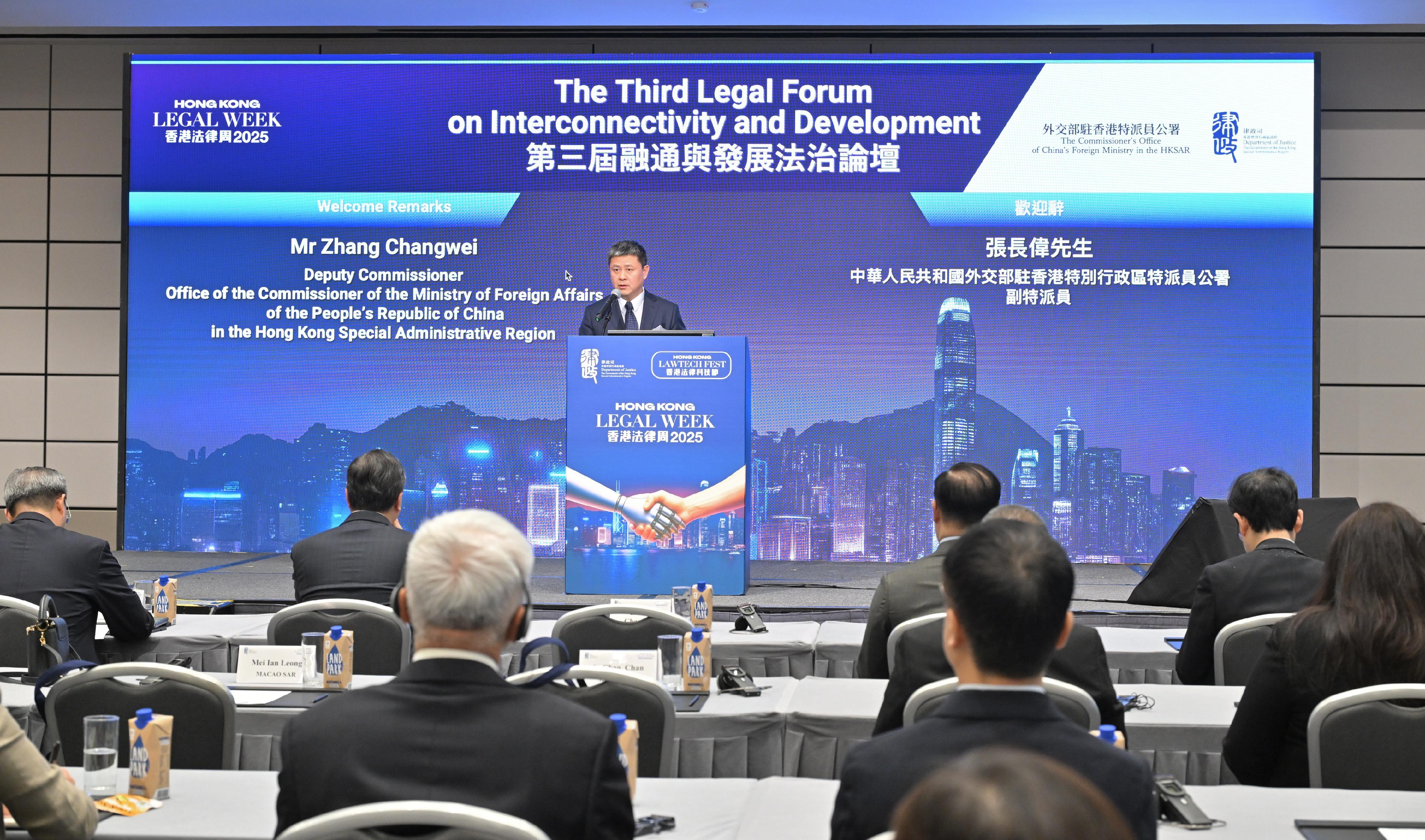
Deputy Commissioner Zhang Changwei (Deputy Commissioner of the Office of the Commissioner of the Ministry of Foreign Affairs of the People's Republic of China in the Hong Kong Special Administrative Region), your excellencies, distinguished guests, ladies and gentlemen,
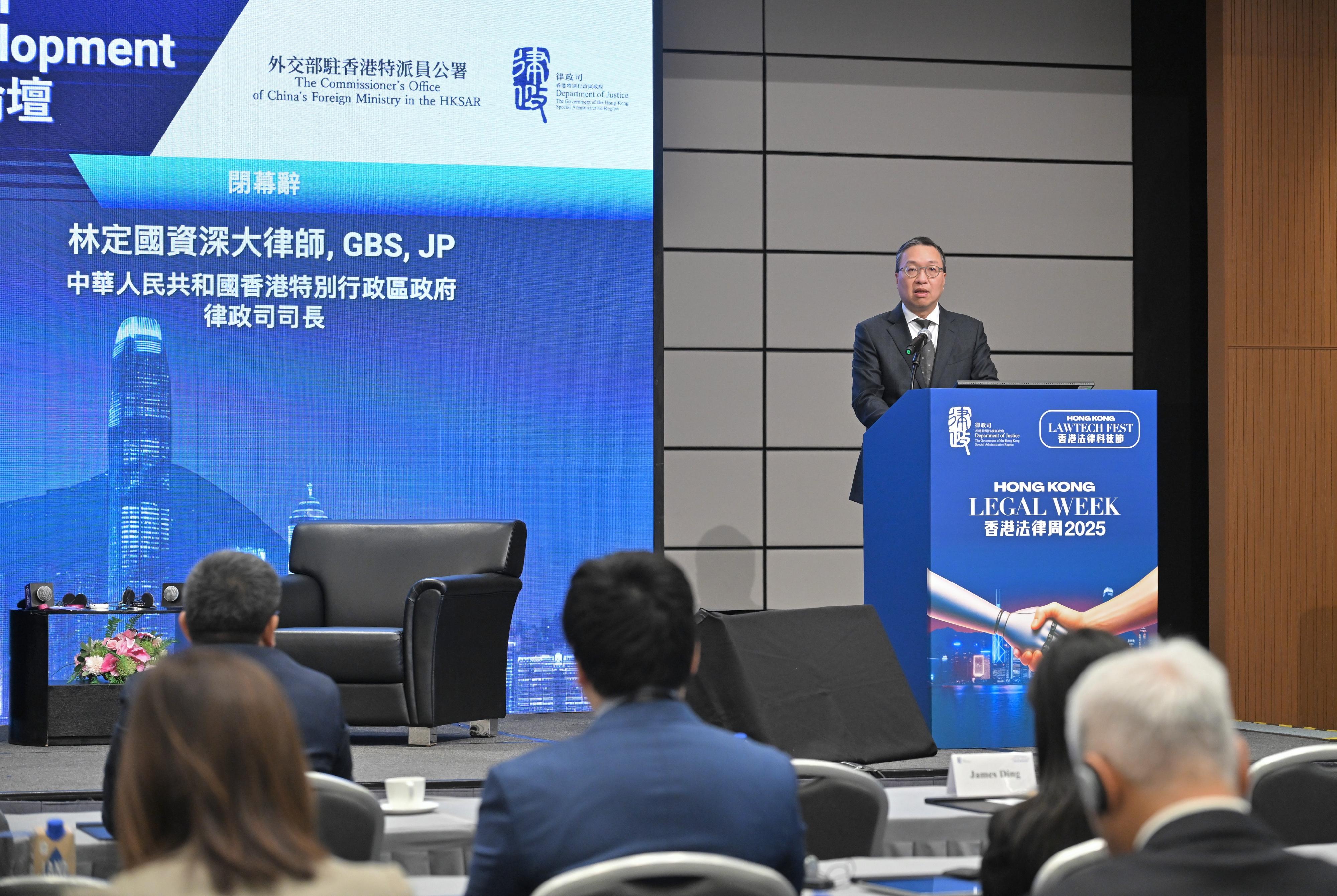
May I first express my sincere gratitude to the Office of the Commissioner of the Ministry of Foreign Affairs of the People's Republic of China in the Hong Kong Special Administrative Region for co-organising the Legal Forum with the Department of Justice (DoJ) for the third year since the launch of the event back in 2023. I would also like to thank our moderators and speakers, some of whom have travelled from afar to share their invaluable insights; as well as to all of you for participating in the Legal Forum this afternoon.
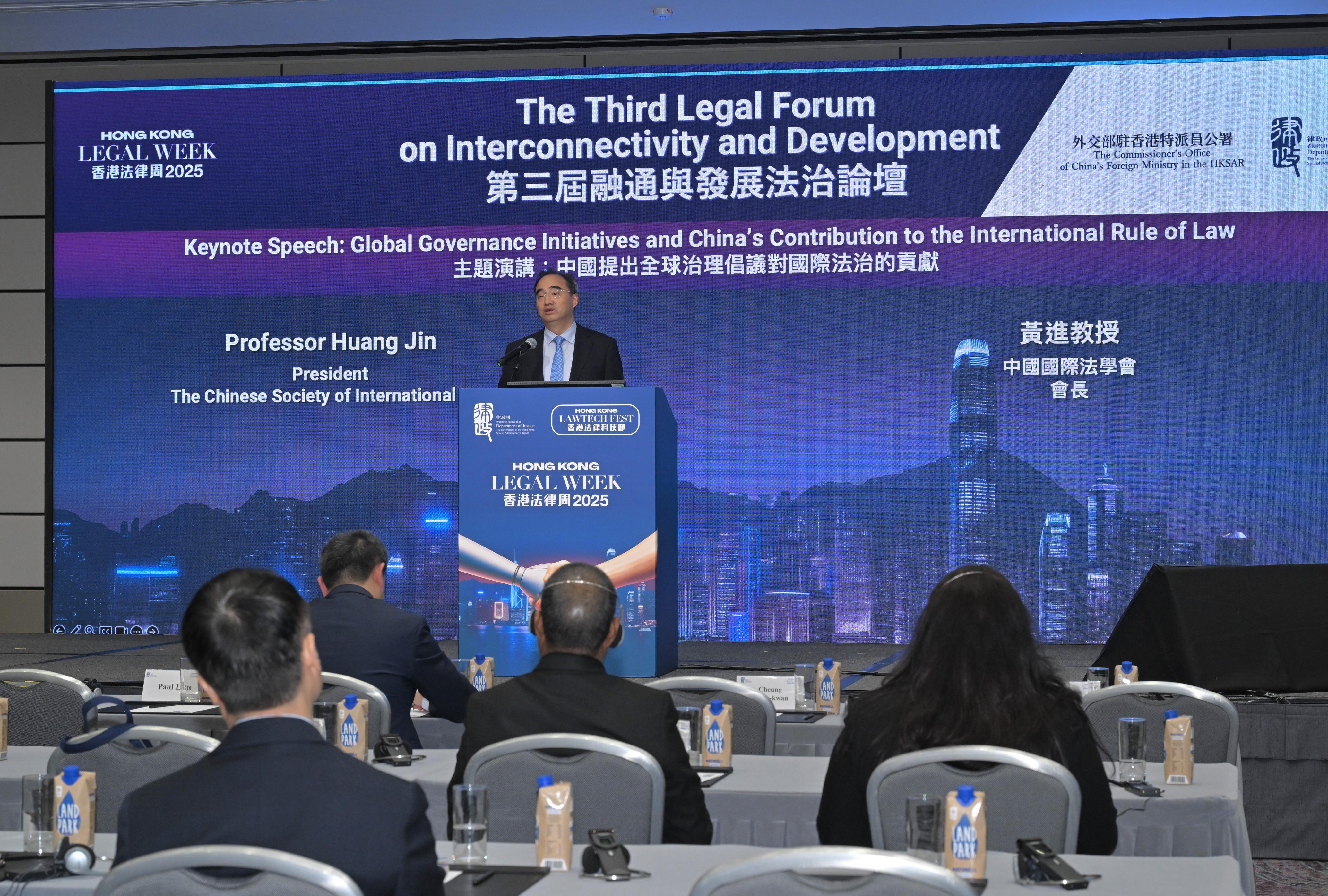
This Forum has built on the success of the past Forum which stressed on international co-operation and echoed the notion of the Global Governance Initiative (GGI) put forward by President Xi Jinping, while the core concept under the GGI is to maintain and enhance multilateralism. China is a staunch supporter of multilateralism and has made consistent contributions to the advancement of international rule of law. In this regard, we had the honour of opening the afternoon's forum with Professor Huang Jin's keynote speech on China's contribution to international rule of law.
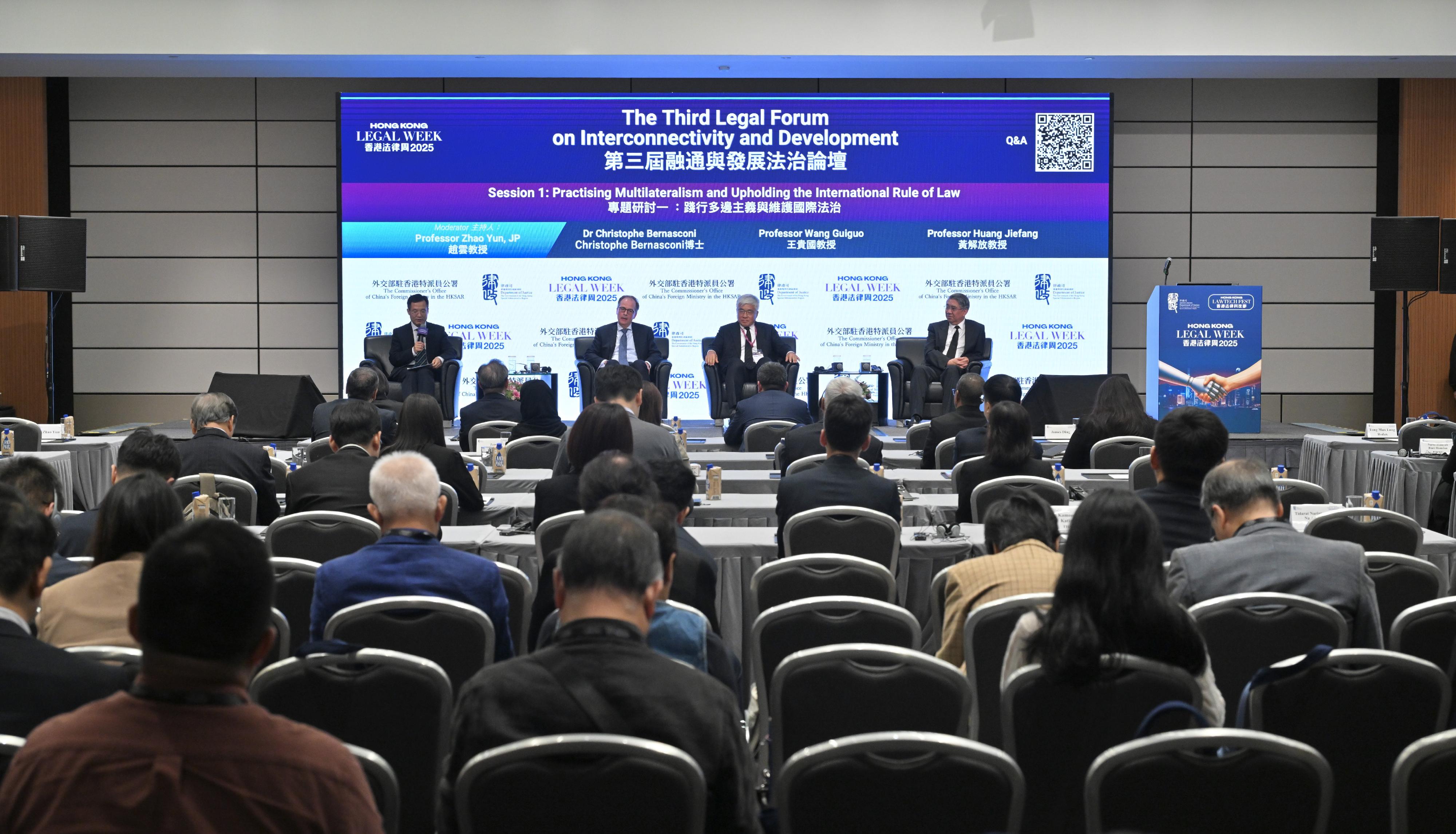
Following the general overview by Professor Huang in his keynote speech, Session 1 looked more specifically at some examples of practising multilateralism and upholding the international rule of law. We had the benefit of learning from the experts from international organisations and from China on how private international law, international mediation and the Greater Bay Area can contribute to practising multilateralism and come up with answers to different global issues in order to uphold the international rule of law.
In this connection, Hong Kong as a global "super connector" and "value-adder", we strongly support upholding the international rule of law under multilateralism. As you may know, the headquarters of the International Organization for Mediation (IOMed) in Hong Kong opened officially on October 20. The IOMed is the world's first intergovernmental international legal organisation dedicated to resolving international disputes through mediation, and providing an important mechanism for upholding the principles of the Charter of the United Nations (UN). As stated by Mr Wang Yi, Minister of Foreign Affairs during the Signing Ceremony of the IOMed Convention held in Hong Kong on May 30 this year, the IOMed is an actualisation of the purposes and principles of the UN Charter. It fills an institutional gap in international mediation and serves as an important public good in the field of the rule of law for better global governance.
Apart from the Regional Office for Asia and the Pacific (ROAP) of the HCCH, which has been established in Hong Kong by the Hague Conference on Private International Law since 2012. Other international intergovernmental organisations such as the Bank for International Settlements, International Monetary Fund, the International Bank for Reconstruction and Development and the International Finance Corporation have set up offices in Hong Kong. Together with the soon-to-be-established office by the Asian Infrastructure Investment Bank, these establishments will further support the city's strategic position as a centre for international legal and dispute resolution. Their presence in Hong Kong is also evidence of our championing multilateralism.
Alongside the physical set-up of institutions akin to building our "hardware", Hong Kong also takes in hand capacity building to invest in our "software" development. The Hong Kong International Legal Talents Training Academy, launched in last year's Hong Kong Legal Week, has been organising practical legal courses, seminars and international exchange programmes both locally and abroad to promote international legal talent exchanges. With the expert committee for the Academy (Hong Kong International Legal Talents Training Expert Committee) consisting of three advisory boards, comprising 17 legal experts and scholars from renowned international, Mainland and local legal organisations and universities - and quite a few of them are also speakers at this Forum - the Academy breeds and boosts legal expertise, contributing to the country's vision in upholding the international rule of law under the multilateral paradigm.
Turning to our Session 2, we looked further down to the promotion and development of international law through emerging technologies. We had the benefit of hearing from prominent legal experts and technology experts from international organisations and universities on their insights on various emerging issues of the interface between law and technology, ranging from digitisation, cryptocurrency to artificial intelligence (AI). As technology could be a double-edged sword, bringing out convenience and advancements to our daily lives on the one hand, but causing some unforeseen risks to the future of humankind on the other hand, there is a need for the international community to come together to develop international rules that harness the benefits of emerging technologies while addressing the potential risks.
My department attaches great importance to the development in the areas of lawtech and AI. We have established the Consultation Group on LawTech Development in January this year to research and formulate specific recommendations to promote the use of lawtech. We also believe that forums and exhibitions could provide an important platform for fostering exchange and co-operation. As part of this year's Hong Kong Legal Week, we will hold the inaugural Hong Kong LawTech Fest 2025, due to take place from tomorrow till this Friday. The event will bring together legal practitioners, technology providers, experts, academics, and policymakers to explore the fast-evolving intersection of law and artificial intelligence, and to showcase the latest innovative products and services shaping legal practices. Other than exhibitions presenting innovative lawtech and Al products and services, there will be expert-led sessions on the practical application of Al and lawtech in legal practice, finishing on the last day with a main stage LawTech Conference under the theme "The AI Era: Shaping the Legal Landscape in the 21st Century", and you are invited to join the LawTech Fest either in person here at the Hong Kong Convention and Exhibition Centre, or virtually online.
We have also supported the UNCITRAL Asia Pacific Judicial Summit, which took place yesterday and concluded earlier this morning, which centred around the themes of digitalisation and the judicial handling of disputes involving the use of AI. Tomorrow morning, we will also have the HCCH Symposium to look at the operation of certain Hague Conventions in the digital age. You are also most welcome to join the Symposium.
Other than the events that I have just mentioned, my department also contributes to the shaping of international rules amidst emerging technologies by participating in various initiatives in collaboration with international organisations and other institutions. For instance, the DoJ Project Office for Collaboration with UNCITRAL (United Nations Commission on International Trade Law), established in November 2020 in the Hong Kong Legal Hub, provides support to the initiatives of the Inclusive Global Legal Innovation Platform on Online Dispute Resolution (iGLIP on ODR), to identify possible future work in respect of online dispute resolution. Experts meet regularly to explore the possibility of developing harmonised standards to ensure the legitimacy of online dispute resolution processes. UNCITRAL in its 58th Commission Session this year endorsed the continued collaboration between UNCITRAL and the iGLIP on ODR. This is an example of proactively developing international rules with foresight, instead of responding after problems arise, in the spirit of the principle of solidarity - which calls for choices and actions to be guided by the interests of the international community as a whole.
In our rather ambitious attempt to navigate in one afternoon through the macro topics of multilateralism and emerging technologies insofar as they relate to the development of international law, I hope you have enjoyed the experts' insights and discussions at today's Legal Forum. As with most dialogues generally, we cannot realistically aim at resolving all the complex issues at one time, but rather, start the conversation and plant some seeds for thought on our minds. As we continue with our yearly exchanges through this Forum, I am confident that this incremental collective and cumulative efforts will no doubt bear fruits as we look back someday in future.
Thank you again for joining us today and I look forward to seeing you at the Forum next year, and perhaps, at the remaining events in our Legal Week.
Ends/Tuesday, December 2, 2025
Issued at HKT 19:25
Issued at HKT 19:25
NNNN